
The following is an excerpt of The Customs Broker Examination, by Scott Warren Taylor and Andrew Moxon. This book is a part of the Customs Broker Exam Preparation Course from Boskage Commerce Publications. We'll be posting a large excerpt here, with new posts every Tuesday and Thursday morning. Click here if you want to read the whole book right away.
Chapter 1: PHYSICAL PREPARATION
Part 5 : Physical Techniques to Reduce Anxiety - Diet
Notes on Diet
In addition to physical activity, one school of thought believes that diet is particularly important, and would have you blasting your system with vitamin supplements while preparing for the test. It is true that a vitamin deficiency can affect you in a variety of negative ways, both physical and mental. However, in America we live in a boundless ocean of diverse foods, and hopefully we have been taught by our mothers to adhere to a balanced diet. If you really want to add something to your diet, you might try vitamins B6, B12, niacin, and/or magnesium supplements if you are habitually nervous; B1 might help your memory; calcium is suppose to relax you, as is pantothenic acid found in rice, beans, etc. Of course you can be analyzed by a reputable nutritionist capable of diagnosing vitamin deficiencies and who can recommend a good diet and vitamin supplement program. Some find that eating too much makes them drowsy and they perform under stress slightly better if they are somewhat, though not excessively, hungry.
Summary
To summarize what you can do physically:
1. Find out how much rest you need naturally.
2. Routinize your sleeping patterns.
3. Be wary of outside demands – real or imaginary – that seem to be suddenly infringing on your sleep time.
4. Consider sleeping aids if nothing else works.
5. Begin immediately to establish a routine of physical exertion.
6. Make certain your diet is balanced.
This concludes today's excerpt from The Customs Broker Examination.
Tuesday, February 24, 2009


Monday, February 23, 2009
Customs Broker Exam Study Tip 3: Using Looseleaf and Bound HTSUS and Regulations
Let’s face it; the materials necessary to study for the Customs Broker Exam are burdensome. Who wants to carry around a bunch of big heavy books? While it’s possible to use online versions while studying, we don’t recommend that you make a habit of this practice. Why? Because you cannot use the online version of the Regulations or HTSUS on the day of the exam. You will also want to make notes in your materials and highlight key words, phrases and sections. Use the online versions after you’ve passed the exam or when you need a quick answer to a client question and you have the online version readily available.
Now that we’ve determined that printed versions are best, what are the options? There are three primary options, looseleaf, paperback (perfect binding) and coil bound.
Looseleaf
The looseleaf version is bulky; however, it can be easily updated when supplements are issued quarterly for the Regulations and in summer for the HTSUS. The print is larger than other versions, making it easier to read. There is also more room for making legible notes in the margin. If you use the looseleaf version, make sure you purchase a good quality binder so the pages turn easily and do not fall out of the binder.
Looseleaf editions can also be used in a publication rack, which allows them to sit open on a desk. The pages tend to turn more easily with a publication rack, and the disadvantage of bulkiness is essentially negated. This makes publication racks a popular choice for exam day.
Paperback/Perfect Binding
The Regulations produced using perfect binding resemble smaller paperback versions of the loose-leaf version (The paperback HTSUS is the same size as the looseleaf). The cover is made from heavier paper and is glued together at the spine with strong flexible glue. These books are lighter and slightly less expensive than the loose-leaf versions; however, they cannot be updated. If you are going to use the book regularly and make notes in the book, these might not be the best options. However, if you are looking for a book that is easy to carry for quick reference, then the paperback edition would be an excellent choice.
Coil-Bound
Coil binding is commonly used for publications that are frequently opened so that the pages lie flat or back-to-back. Generally, binding is accomplished by punching holes along the entire length of the spine of the page and winding a wire through the holes to provide a fully flexible hinge at the spine. Coil bound versions are smaller and more lightweight than their looseleaf counterparts are (they are the same size as the perfect-bound). Coil binding is similar to looseleaf; however, the pages cannot be removed and they cannot be updated.
For persons taking the exam, we suggest that you consider the looseleaf book or a coil bound version. Both books are sturdy and the primary differences relate to the ability to update the looseleaf version versus the ease of carrying the coil bound version.
Click HERE to view the various binding options for the CBP Regulations.
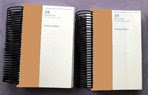

Now that we’ve determined that printed versions are best, what are the options? There are three primary options, looseleaf, paperback (perfect binding) and coil bound.
Looseleaf
The looseleaf version is bulky; however, it can be easily updated when supplements are issued quarterly for the Regulations and in summer for the HTSUS. The print is larger than other versions, making it easier to read. There is also more room for making legible notes in the margin. If you use the looseleaf version, make sure you purchase a good quality binder so the pages turn easily and do not fall out of the binder.
Looseleaf editions can also be used in a publication rack, which allows them to sit open on a desk. The pages tend to turn more easily with a publication rack, and the disadvantage of bulkiness is essentially negated. This makes publication racks a popular choice for exam day.
Paperback/Perfect Binding
The Regulations produced using perfect binding resemble smaller paperback versions of the loose-leaf version (The paperback HTSUS is the same size as the looseleaf). The cover is made from heavier paper and is glued together at the spine with strong flexible glue. These books are lighter and slightly less expensive than the loose-leaf versions; however, they cannot be updated. If you are going to use the book regularly and make notes in the book, these might not be the best options. However, if you are looking for a book that is easy to carry for quick reference, then the paperback edition would be an excellent choice.
Coil-Bound
Coil binding is commonly used for publications that are frequently opened so that the pages lie flat or back-to-back. Generally, binding is accomplished by punching holes along the entire length of the spine of the page and winding a wire through the holes to provide a fully flexible hinge at the spine. Coil bound versions are smaller and more lightweight than their looseleaf counterparts are (they are the same size as the perfect-bound). Coil binding is similar to looseleaf; however, the pages cannot be removed and they cannot be updated.
For persons taking the exam, we suggest that you consider the looseleaf book or a coil bound version. Both books are sturdy and the primary differences relate to the ability to update the looseleaf version versus the ease of carrying the coil bound version.
Click HERE to view the various binding options for the CBP Regulations.

Thursday, February 19, 2009
The Customs Broker Examination, CH 1, Part 4 : Physical Techniques to Reduce Anxiety

The following is an excerpt of The Customs Broker Examination, by Scott Warren Taylor and Andrew Moxon. This book is a part of the Customs Broker Exam Preparation Course from Boskage Commerce Publications. We'll be posting a large excerpt here, with new posts every Tuesday and Thursday morning. Click here if you want to read the whole book right away.
Chapter 1: PHYSICAL PREPARATION
Part 4: Physical Techniques to Reduce Anxiety - Exercise
The Role of Exercise in Combating Anxiety
Still, there remain the waking hours. We have examined what happens physically when the body begins the anxiety cycle; when the body, by way of a generous imagination, prepares for important action by rehearsing failure. Your mind cries “wolf!” and your body prepares physically for the wolf. When the wolf cannot be found, your imagination invents it. Extra energy is summoned forth, and what happens to this energy? It seems that there is nothing to do, but we are consumed with the notion to do something.
Humans move energy from place to place, trying different circuits for action. We tend to believe that if energy is present in this form, there is a need for it, and the consequent energy generated from the onset of anxiety is no exception. We look fervently for the wolf. Not finding it, we plumb our energy to our imagination, which creates a kind of “wolf” for us. This increases our anxiety, of course, so we create more protective energy, which we dutifully plumb back to our imagination. The dreadful cycle has begun. Our imagination systematically becomes a cruel conjurer, whipping up tales of failure and woe for this excess energy to feed on. But what we must realize is that the greater the wolf, the greater the biological, energetic reaction to it.
One preventive measure for avoiding this cycle is physical exertion, which will employ the excess energy in less destructive ways. If you are typical of ninety-nine percent of the people who take the CBE, you probably spend the majority of your days in a sedentary manner. After all, the Customs brokerage business is not a particularly athletic one.
Your choice of physical activity and the degree of it are yours and will reflect your personal habits and character. Don’t overdo, but you might try pulling a few of the less important muscles.
I can promise that a routine session of physical activity, no matter how slight, will reduce the likelihood of more destructive uses of anxious energy. Additionally, a routine schedule of physical activity has the accompanying benefit of bolstering your confidence through improved self-image and greater discipline of your being.
And finally, while exercising, we become mentally preoccupied by the physical activity. I have been impressed by the mind’s ability to be enormously distracted by such things as breathing, perspiration, leg pain, muscle fatigue, and certain injustices to the feet, and to therefore forget such things as imagining yourself telling your boss that you failed the CBE. But again, the choice of physical activity is an individual one. If you have never exerted yourself physically, don’t try to repent suddenly now - you really could injure yourself. Talk to a doctor first and start slow. Even the simplest form of routine physical action is helpful.
This concludes today's excerpt from The Customs Broker Examination.
Chapter 1: PHYSICAL PREPARATION
Part 4: Physical Techniques to Reduce Anxiety - Exercise
The Role of Exercise in Combating Anxiety
Still, there remain the waking hours. We have examined what happens physically when the body begins the anxiety cycle; when the body, by way of a generous imagination, prepares for important action by rehearsing failure. Your mind cries “wolf!” and your body prepares physically for the wolf. When the wolf cannot be found, your imagination invents it. Extra energy is summoned forth, and what happens to this energy? It seems that there is nothing to do, but we are consumed with the notion to do something.
Humans move energy from place to place, trying different circuits for action. We tend to believe that if energy is present in this form, there is a need for it, and the consequent energy generated from the onset of anxiety is no exception. We look fervently for the wolf. Not finding it, we plumb our energy to our imagination, which creates a kind of “wolf” for us. This increases our anxiety, of course, so we create more protective energy, which we dutifully plumb back to our imagination. The dreadful cycle has begun. Our imagination systematically becomes a cruel conjurer, whipping up tales of failure and woe for this excess energy to feed on. But what we must realize is that the greater the wolf, the greater the biological, energetic reaction to it.
One preventive measure for avoiding this cycle is physical exertion, which will employ the excess energy in less destructive ways. If you are typical of ninety-nine percent of the people who take the CBE, you probably spend the majority of your days in a sedentary manner. After all, the Customs brokerage business is not a particularly athletic one.
Your choice of physical activity and the degree of it are yours and will reflect your personal habits and character. Don’t overdo, but you might try pulling a few of the less important muscles.
I can promise that a routine session of physical activity, no matter how slight, will reduce the likelihood of more destructive uses of anxious energy. Additionally, a routine schedule of physical activity has the accompanying benefit of bolstering your confidence through improved self-image and greater discipline of your being.
And finally, while exercising, we become mentally preoccupied by the physical activity. I have been impressed by the mind’s ability to be enormously distracted by such things as breathing, perspiration, leg pain, muscle fatigue, and certain injustices to the feet, and to therefore forget such things as imagining yourself telling your boss that you failed the CBE. But again, the choice of physical activity is an individual one. If you have never exerted yourself physically, don’t try to repent suddenly now - you really could injure yourself. Talk to a doctor first and start slow. Even the simplest form of routine physical action is helpful.
This concludes today's excerpt from The Customs Broker Examination.
Wednesday, February 18, 2009
Are American Flags Made in America?
 What is red, white and blue and made in China? Take a look at your American flag for the answer.
Although U.S. companies still dominate the flag market, the U.S. Census Bureau estimates that $5.3 million worth of U.S. flags were imported from other countries in 2006, mostly from China. On February 13, 2009, Rep. Dan Boren [D-OK] introduced the “Genuine American Flag Act”, H.R. 1082 which proposes a prohibition on the importation of American flags manufactured by foreign countries.
Several states already have laws containing various provisions from requiring American-made flags for use in schools and public offices to banning the sale of foreign-made flags in the state. While the proposed law may not meet with much opposition, it may violate international trade agreements with other countries. Current World Trade Organization policy states that products made in foreign countries cannot be treated "less favorably" than those made in the home market.
We want to hear from you. Do you think this bill violates the WTO policy? Do you think this bill pass even though it may violate an international trade agreement?
Tuesday, February 17, 2009
The Customs Broker Examination, CH 1, Part 3: Physical Techniques to Reduce Anxiety

The following is an excerpt of The Customs Broker Examination, by Scott Warren Taylor and Andrew Moxon. This book is a part of the Customs Broker Exam Preparation Course from Boskage Commerce Publications. We'll be posting a large excerpt here, with new posts every Tuesday and Thursday morning. Click here if you want to read the whole book right away.
Chapter 1: PHYSICAL PREPARATION
Part 3: Physical Techniques to Reduce Anxiety – Sleep Patterns
Having pointed out the importance of the CBE and subsequent license, it is relevant to discuss what can be done, from a physical standpoint, to reduce harmful anxiety. Anxiety is principally a mental phenomenon and functions as a mental detriment to performance, but it has physical qualities as well, and there are steps you can take to combat anxiety on a physical level. In this chapter, we will be discussing some common-sense actions one can take to physically fend off unproductive anxiety and physically prepare for the CBE.
Sleep Patterns
If I were helping my over-imaginative friend to pass the CBE today, I could offer ideas for avoiding a repeat performance. One of the first things I would suggest is that he routinize his sleeping patterns. He complained that certain demands kept him from sleeping regularly, but the fact is that one greatly reduces one’s chances of overcoming anxiety in a state of physical stress caused by lack of sleep or irregular sleeping patterns. Criteria for a routine sleep pattern are largely individual. All of us, for whatever biological or psychological reasons, need different amounts of sleep, but we should additionally admit that we need different amounts of sleep at different points in our lives. To determine how much sleep is sufficient for top mental performance at this particular point in your life, try this exercise: simply choose a regular time to retire each night, say 10:00, and then allow yourself to sleep undisturbed until you awaken naturally, without an alarm clock. Repeat this method for five days, and by the fifth day you should be able to average the number of hours spent in slumber each night, and arrive at a fairly realistic indication of your personal sleeping habits. Violate your sleeping requirements and you increase your chance of failure accordingly.
You may imagine, as my friend did, that demands from outside sources are suddenly infringing upon your sleep time. Carefully examine the circumstances that interfere with achieving routine sleep. It is highly probable that what appear to you to be legitimate reasons for not sleeping regularly are, in fact, inventions you yourself are creating as obstacles to success. If this seems to be happening, ask yourself: Am I really suddenly required to spend 12 hours a day at the office? Or am I preparing a case of justification for my predicted failure? Is there a correlation between the number of days left before the CBE and the increased demands on my time by outside sources?
If you seem to have an unresolvable conflict between the demands of preparing for the CBE and demands from outside sources, test the conflict by asking yourself if there is a course of action that you can take, no matter how difficult the action may seem, that will satisfy both demands.
It is true that certain personalities seem to have a compulsion for justifying failure in ways that are perceived to be acceptable to their peers, long before the failure occurs. One of their favorite tricks is to push themselves to the point of exhaustion due to seemingly unavoidable demands placed upon them by outside sources. They do not sleep. They drag themselves, hollow-eyed and stoop-shouldered, into the examination room on the verge of collapse. These people do sometimes succeed, but if they fail it is with the reassurance that their peers will see how unfairly they were beset by destructive and time-consuming demands.
All of this is calculated to avoid humiliation and to preserve the notion that they could have passed, had those outside demands not occurred.
One further note: be wary of too much sleep. It can be as detrimental as not having enough. Too much sleep may be symptomatic of depression or regression from the perceived demands of the upcoming test. Sleep too much and you’ll find your mind feeling fat, groggy, generally sluggish and unresponsive. The key is to “routinize” your sleep to the correct amount you require.
Most of all, pay special attention to the night before the CBE. If you are prone to sleepless nervous nights, you may want to consult your physician for a mild, sleep-inducing drug, or a natural supplement such as melatonin. If you do take this alternative, try the substance out a few weeks before the examination to check your mental preparedness the next day.
This concludes today's excerpt from The Customs Broker Examination.
Chapter 1: PHYSICAL PREPARATION
Part 3: Physical Techniques to Reduce Anxiety – Sleep Patterns
Having pointed out the importance of the CBE and subsequent license, it is relevant to discuss what can be done, from a physical standpoint, to reduce harmful anxiety. Anxiety is principally a mental phenomenon and functions as a mental detriment to performance, but it has physical qualities as well, and there are steps you can take to combat anxiety on a physical level. In this chapter, we will be discussing some common-sense actions one can take to physically fend off unproductive anxiety and physically prepare for the CBE.
Sleep Patterns
If I were helping my over-imaginative friend to pass the CBE today, I could offer ideas for avoiding a repeat performance. One of the first things I would suggest is that he routinize his sleeping patterns. He complained that certain demands kept him from sleeping regularly, but the fact is that one greatly reduces one’s chances of overcoming anxiety in a state of physical stress caused by lack of sleep or irregular sleeping patterns. Criteria for a routine sleep pattern are largely individual. All of us, for whatever biological or psychological reasons, need different amounts of sleep, but we should additionally admit that we need different amounts of sleep at different points in our lives. To determine how much sleep is sufficient for top mental performance at this particular point in your life, try this exercise: simply choose a regular time to retire each night, say 10:00, and then allow yourself to sleep undisturbed until you awaken naturally, without an alarm clock. Repeat this method for five days, and by the fifth day you should be able to average the number of hours spent in slumber each night, and arrive at a fairly realistic indication of your personal sleeping habits. Violate your sleeping requirements and you increase your chance of failure accordingly.
You may imagine, as my friend did, that demands from outside sources are suddenly infringing upon your sleep time. Carefully examine the circumstances that interfere with achieving routine sleep. It is highly probable that what appear to you to be legitimate reasons for not sleeping regularly are, in fact, inventions you yourself are creating as obstacles to success. If this seems to be happening, ask yourself: Am I really suddenly required to spend 12 hours a day at the office? Or am I preparing a case of justification for my predicted failure? Is there a correlation between the number of days left before the CBE and the increased demands on my time by outside sources?
If you seem to have an unresolvable conflict between the demands of preparing for the CBE and demands from outside sources, test the conflict by asking yourself if there is a course of action that you can take, no matter how difficult the action may seem, that will satisfy both demands.
It is true that certain personalities seem to have a compulsion for justifying failure in ways that are perceived to be acceptable to their peers, long before the failure occurs. One of their favorite tricks is to push themselves to the point of exhaustion due to seemingly unavoidable demands placed upon them by outside sources. They do not sleep. They drag themselves, hollow-eyed and stoop-shouldered, into the examination room on the verge of collapse. These people do sometimes succeed, but if they fail it is with the reassurance that their peers will see how unfairly they were beset by destructive and time-consuming demands.
All of this is calculated to avoid humiliation and to preserve the notion that they could have passed, had those outside demands not occurred.
One further note: be wary of too much sleep. It can be as detrimental as not having enough. Too much sleep may be symptomatic of depression or regression from the perceived demands of the upcoming test. Sleep too much and you’ll find your mind feeling fat, groggy, generally sluggish and unresponsive. The key is to “routinize” your sleep to the correct amount you require.
Most of all, pay special attention to the night before the CBE. If you are prone to sleepless nervous nights, you may want to consult your physician for a mild, sleep-inducing drug, or a natural supplement such as melatonin. If you do take this alternative, try the substance out a few weeks before the examination to check your mental preparedness the next day.
This concludes today's excerpt from The Customs Broker Examination.
Monday, February 16, 2009
Customs Broker Exam Study Tip 2: Exam Study Aids

In our first study tip, we discussed the importance of obtaining all of the required resources that are necessary to take the exam. This study tip will focus on the various study aids and materials that will help you prepare for the exam.
The percentage of people who pass the Customs Broker Exam the first time is low, ranging from 3% to 25%. While it is possible to pass the Customs Broker Exam using only the required exam materials, most people find using a variety a supplemental materials and exam study courses significantly increases their potential of passing the exam. The use of additional study materials also improves comprehension and makes better use of limited study time.
Some people learn better by actually doing a task, while others need to read the instructions or hear the instructions. Determining your style of learning and how you learn the best is the key to studying for the exam. If you do not have time to go to lectures, you may prefer correspondence or online courses. If you comprehend better by hearing the information, you may prefer audio lectures or classroom instruction. You should seriously consider the time you have to commit to studying and your learning style when selecting study courses and training materials. We have listed just a few options for using supplemental study aids and courses here.
1. Past Exams
Taking the past exams is a good way to become familiar with the format and types of questions that appear on the test. Using past exams as a study aid also helps you learn the materials, boosts confidence, shows your progress, as well as areas that need improvement.
2. DVD's and CD's
If you want the convenience of learning at your own pace CD's and DVD's allow you to study from the comfort of your home or office and may be reviewed as often as you like. CD's provide audio which is great for listening to on your daily commute. The DVD's usually simulate a classroom environment but the advantage is that you can view the lectures at your convenience rather than commute to a class.
3. Online Study Courses
For students who want the convenience of studying at their own pace, online courses provide instruction, examples, quizzes and other tools that are usually available 24/7 and anywhere you have an Internet connection.
Boskage Commerce Publications offers a variety of courses, study plans and other materials designed to fit different learning styles, experience levels and needs of students. Click HERE to view a variety of materials and courses. Consider your learning style as you review each of these options. We sincerely believe you will find that one or a combination of several that fits your needs perfectly; however, we may be able to customize plans to fit your needs. Be sure to check out the Customs Broker Exam Room Guide, a perfect resource for regular study and use on test day. This coil bound book contains all CATAIR sections, Directives and miscellaneous resources that will be tested on the upcoming exam. The Guide also contains includes quick-reference fact sheets such as Incoterms, trade program indicators, types of appraisement, acronyms, CBP fees and more.
Stay tuned to the Boskage Trade News for more helpful hints on studying for the Customs Broker Exam! The next article will provide the pros and cons of using the loose-leaf version of the CBP Regulations. We also welcome any suggestions on topics you would like to see discussed.
The percentage of people who pass the Customs Broker Exam the first time is low, ranging from 3% to 25%. While it is possible to pass the Customs Broker Exam using only the required exam materials, most people find using a variety a supplemental materials and exam study courses significantly increases their potential of passing the exam. The use of additional study materials also improves comprehension and makes better use of limited study time.
Some people learn better by actually doing a task, while others need to read the instructions or hear the instructions. Determining your style of learning and how you learn the best is the key to studying for the exam. If you do not have time to go to lectures, you may prefer correspondence or online courses. If you comprehend better by hearing the information, you may prefer audio lectures or classroom instruction. You should seriously consider the time you have to commit to studying and your learning style when selecting study courses and training materials. We have listed just a few options for using supplemental study aids and courses here.
1. Past Exams
Taking the past exams is a good way to become familiar with the format and types of questions that appear on the test. Using past exams as a study aid also helps you learn the materials, boosts confidence, shows your progress, as well as areas that need improvement.
2. DVD's and CD's
If you want the convenience of learning at your own pace CD's and DVD's allow you to study from the comfort of your home or office and may be reviewed as often as you like. CD's provide audio which is great for listening to on your daily commute. The DVD's usually simulate a classroom environment but the advantage is that you can view the lectures at your convenience rather than commute to a class.
3. Online Study Courses
For students who want the convenience of studying at their own pace, online courses provide instruction, examples, quizzes and other tools that are usually available 24/7 and anywhere you have an Internet connection.
Boskage Commerce Publications offers a variety of courses, study plans and other materials designed to fit different learning styles, experience levels and needs of students. Click HERE to view a variety of materials and courses. Consider your learning style as you review each of these options. We sincerely believe you will find that one or a combination of several that fits your needs perfectly; however, we may be able to customize plans to fit your needs. Be sure to check out the Customs Broker Exam Room Guide, a perfect resource for regular study and use on test day. This coil bound book contains all CATAIR sections, Directives and miscellaneous resources that will be tested on the upcoming exam. The Guide also contains includes quick-reference fact sheets such as Incoterms, trade program indicators, types of appraisement, acronyms, CBP fees and more.
Stay tuned to the Boskage Trade News for more helpful hints on studying for the Customs Broker Exam! The next article will provide the pros and cons of using the loose-leaf version of the CBP Regulations. We also welcome any suggestions on topics you would like to see discussed.
Thursday, February 12, 2009
The Customs Broker Examination, CH 1, Part 2: Hidden Cause of Failure
The following is an excerpt of The Customs Broker Examination, by Scott Warren Taylor and Andrew Moxon. This book is a part of the Customs Broker Exam Preparation Course from Boskage Commerce Publications. We'll be posting a large excerpt here, with new posts every Tuesday and Thursday morning. Click here if you want to read the whole book right away.
Chapter 1: PHYSICAL PREPARATION
Part 2: The Hidden Cause of Failure
Behind each of the five main reasons given for failure to pass the CBE lies an evasive culprit: the problem of anxiety. When students are asked why they failed, their answers fall into one or more of the five categories of causes. Discuss the problem further, and the problem of anxiety will nearly always surface.
Students enter the examination room on test day and find that the test is more difficult than they thought. They are surprised at the questions asked the level of knowledge required. “How could this be?” the student may wonder. In fact, tests change very little from year to year. The wording and format of questions may change, new questions are added to accommodate new Regulations, but the areas of law that are tested remain fairly consistent.
The reason students are surprised at the difficulty of the test often has to do with anxiety. When taking practice examinations, they simply were not honest with themselves when evaluating their study progress. To do so is to confront the fear of failure. To avoid accurately and honestly simulating the test in order to evaluate progress is to suppress the fear of failure or the anxiety over the possibility of failure.
Other reasons – that there was not sufficient time, that work or personal demands interfered – have a similar root in anxiety, or fear of failure.
The truth is that behind the justifications, the prevalent cause of failure is test anxiety that is present (in greater or lesser degrees) in all broker aspirants prior to and during the taking of the CBE. Such fear prevents a student from preparing properly prior to the examination, and can greatly impede the student’s test-taking ability during the actual time in the examination room.
Solve the problem of anxiety and you will greatly increase your chance of success, but the secret is to first recognize its presence. Simple anxiety, as opposed to acute or clinical anxiety, is a debilitating emotion, rather than a crippling one. In most cases, the presence of simple anxiety merely makes the effort at hand more difficult without actually bringing progress to a halt. It is for this reason that the first two chapters of this book are devoted to understanding the effects of anxiety and understanding ways to work toward overcoming those effects. Time spent with these two chapters will influence the degree of success you will have in learning from the other chapters.
This concludes today's excerpt from The Customs Broker Examination.
Chapter 1: PHYSICAL PREPARATION
Part 2: The Hidden Cause of Failure
Behind each of the five main reasons given for failure to pass the CBE lies an evasive culprit: the problem of anxiety. When students are asked why they failed, their answers fall into one or more of the five categories of causes. Discuss the problem further, and the problem of anxiety will nearly always surface.
Students enter the examination room on test day and find that the test is more difficult than they thought. They are surprised at the questions asked the level of knowledge required. “How could this be?” the student may wonder. In fact, tests change very little from year to year. The wording and format of questions may change, new questions are added to accommodate new Regulations, but the areas of law that are tested remain fairly consistent.
The reason students are surprised at the difficulty of the test often has to do with anxiety. When taking practice examinations, they simply were not honest with themselves when evaluating their study progress. To do so is to confront the fear of failure. To avoid accurately and honestly simulating the test in order to evaluate progress is to suppress the fear of failure or the anxiety over the possibility of failure.
Other reasons – that there was not sufficient time, that work or personal demands interfered – have a similar root in anxiety, or fear of failure.
The truth is that behind the justifications, the prevalent cause of failure is test anxiety that is present (in greater or lesser degrees) in all broker aspirants prior to and during the taking of the CBE. Such fear prevents a student from preparing properly prior to the examination, and can greatly impede the student’s test-taking ability during the actual time in the examination room.
Solve the problem of anxiety and you will greatly increase your chance of success, but the secret is to first recognize its presence. Simple anxiety, as opposed to acute or clinical anxiety, is a debilitating emotion, rather than a crippling one. In most cases, the presence of simple anxiety merely makes the effort at hand more difficult without actually bringing progress to a halt. It is for this reason that the first two chapters of this book are devoted to understanding the effects of anxiety and understanding ways to work toward overcoming those effects. Time spent with these two chapters will influence the degree of success you will have in learning from the other chapters.
This concludes today's excerpt from The Customs Broker Examination.
Tuesday, February 10, 2009
The Customs Broker Examination, Ch. 01, Pt. 01: Causes of Failure
The following is an excerpt of The Customs Broker Examination, by Scott Warren Taylor and Andrew Moxon. This book is a part of the Customs Broker Exam Preparation Course from Boskage Commerce Publications. We'll be posting a large excerpt here, with new posts every Tuesday and Thursday morning. Click here if you want to read the whole book right away.
Chapter 1: PHYSICAL PREPARATION
Part 1: Why Most People Fail the Customs Broker Examination
The Customs Broker Examination (CBE) can be a long and arduous exam, generally 80 questions and four hours long. The test is given in a quiet examination room. Test takers are usually allowed a desk, a pencil, a calculator and printed material, including notes and reference materials.
Few people pass the CBE – a pass rate below 10 percent is not uncommon, and one higher than 20 percent is rare. That means that, on any given examination day, it is likely that out of ten students seeking a license, nine will leave the examination room without a passing score. But what is perhaps even more phenomenal is that of the 1 in 10 that are likely to pass, most have failed the test before. They pass on the second, third, or fourth attempts.
Causes of Failure, as Stated by the Student
There are perhaps as many reasons for failing the CBE as there are students attempting to pass. However, as you can see by looking at the most common reasons given for failure, there are some predictable problems:
1. THE TEST WAS HARDER THAN I THOUGHT.
Quite common for first time test takers who may, nearly on a whim, use one or two prior tests and a few hours of study as preparation for the CBE. Their first encounter is shocking and sobering at the same time. Typically, this student will decide that the test is either not passable or not worth the effort. For this student, the first attempt is often the last attempt. For a smaller percentage of those who fail the first time, the failure serves as motivation to take more time preparing: study harder, seek help, and take a lot more practice examinations without sneaking a peek at the answers (which gives a false sense of knowledge).
The best way for the student to gauge readiness for the CBE is to take several previous CBE's under controlled conditions. This means carefully timing the test-taking period and using only the resource materials allowed in the examination room when taking the practice test. If none of the practice scores are below 75 percent and the average score is in the 80-percent range, the student can walk confidently into the examination room on test day. Anything less is questionable preparation. If you have purchased this book as part of our Study Plan, the last six exams are available as part of our software.
2. I DIDN’T HAVE ENOUGH TIME TO STUDY.
This catchall excuse is really a variation of the above justification. “I didn’t have enough time to study” often means, “I didn’t realize how much study was involved.” Confront the difficulty of the CBE and you will either find the time for adequate preparation, or will simply retract the license application in anticipation of a time when more preparation time will be available. The test is so demanding that unless a student is prepared and able to allocate 100 or more hours of preparation toward study, drill, and memorization, the chances of success are very small.
3. THE DEMANDS OF WORK WERE TOO GREAT.
When a student sits for the CBE, it is often at the request of an employer. Employer decisions often can lag behind need and are made as a result of an existing problem instead of being made in anticipation of a problem. Hence, at a time when the company is increasing business or broadening its services, the employed student must allocate additional time to prepare for the CBE. This two-hammered demand is a common element in failure.
4. PERSONAL DEMANDS INTERFERED.
Because a number of months must be dedicated to preparing for the CBE, and because few students can exclusively devote their time to preparation, personal demands frequently interfere. True failure of this kind is rare, however, and this justification for failure serves most often as a comforting excuse.
5. THE MATERIAL IS TOO DIFFICULT.
The final cause of failure is the least-often admitted: that the materials themselves – the U.S. Customs Regulations, related trade and tariff acts, and the Harmonized Tariff Schedule of the United States (HTSUS) – were simply too difficult for the student to comprehend. Soon after reviewing the material, most students conclude that it is the volume of material, not the level of difficulty, that impedes comprehension. Most students believe that if they can find the time and materials to help them prepare, they can pass the test. The few students who cite reason number five as the cause of failure are often students for whom English is a second language or those who are far removed from school and therefore are not accustomed to study and testing.
But there is another cause of failure, one that is rarely stated, and one that, once comprehended, can be avoided.
This concludes today's excerpt from The Customs Broker Examination.
Chapter 1: PHYSICAL PREPARATION
Part 1: Why Most People Fail the Customs Broker Examination
The Customs Broker Examination (CBE) can be a long and arduous exam, generally 80 questions and four hours long. The test is given in a quiet examination room. Test takers are usually allowed a desk, a pencil, a calculator and printed material, including notes and reference materials.
Few people pass the CBE – a pass rate below 10 percent is not uncommon, and one higher than 20 percent is rare. That means that, on any given examination day, it is likely that out of ten students seeking a license, nine will leave the examination room without a passing score. But what is perhaps even more phenomenal is that of the 1 in 10 that are likely to pass, most have failed the test before. They pass on the second, third, or fourth attempts.
Causes of Failure, as Stated by the Student
There are perhaps as many reasons for failing the CBE as there are students attempting to pass. However, as you can see by looking at the most common reasons given for failure, there are some predictable problems:
1. THE TEST WAS HARDER THAN I THOUGHT.
Quite common for first time test takers who may, nearly on a whim, use one or two prior tests and a few hours of study as preparation for the CBE. Their first encounter is shocking and sobering at the same time. Typically, this student will decide that the test is either not passable or not worth the effort. For this student, the first attempt is often the last attempt. For a smaller percentage of those who fail the first time, the failure serves as motivation to take more time preparing: study harder, seek help, and take a lot more practice examinations without sneaking a peek at the answers (which gives a false sense of knowledge).
The best way for the student to gauge readiness for the CBE is to take several previous CBE's under controlled conditions. This means carefully timing the test-taking period and using only the resource materials allowed in the examination room when taking the practice test. If none of the practice scores are below 75 percent and the average score is in the 80-percent range, the student can walk confidently into the examination room on test day. Anything less is questionable preparation. If you have purchased this book as part of our Study Plan, the last six exams are available as part of our software.
2. I DIDN’T HAVE ENOUGH TIME TO STUDY.
This catchall excuse is really a variation of the above justification. “I didn’t have enough time to study” often means, “I didn’t realize how much study was involved.” Confront the difficulty of the CBE and you will either find the time for adequate preparation, or will simply retract the license application in anticipation of a time when more preparation time will be available. The test is so demanding that unless a student is prepared and able to allocate 100 or more hours of preparation toward study, drill, and memorization, the chances of success are very small.
3. THE DEMANDS OF WORK WERE TOO GREAT.
When a student sits for the CBE, it is often at the request of an employer. Employer decisions often can lag behind need and are made as a result of an existing problem instead of being made in anticipation of a problem. Hence, at a time when the company is increasing business or broadening its services, the employed student must allocate additional time to prepare for the CBE. This two-hammered demand is a common element in failure.
4. PERSONAL DEMANDS INTERFERED.
Because a number of months must be dedicated to preparing for the CBE, and because few students can exclusively devote their time to preparation, personal demands frequently interfere. True failure of this kind is rare, however, and this justification for failure serves most often as a comforting excuse.
5. THE MATERIAL IS TOO DIFFICULT.
The final cause of failure is the least-often admitted: that the materials themselves – the U.S. Customs Regulations, related trade and tariff acts, and the Harmonized Tariff Schedule of the United States (HTSUS) – were simply too difficult for the student to comprehend. Soon after reviewing the material, most students conclude that it is the volume of material, not the level of difficulty, that impedes comprehension. Most students believe that if they can find the time and materials to help them prepare, they can pass the test. The few students who cite reason number five as the cause of failure are often students for whom English is a second language or those who are far removed from school and therefore are not accustomed to study and testing.
But there is another cause of failure, one that is rarely stated, and one that, once comprehended, can be avoided.
This concludes today's excerpt from The Customs Broker Examination.
Monday, February 9, 2009
Customs Broker Exam Study Tip 1: Required Resources
Now that you have made the decision to take the October Customs Broker Exam, it is important develop a study plan that guarantees your chances of success. Boskage wants to help you achieve your goal of passing the exam; therefore, we are starting a series of articles to support you on your journey to success! Our first topic in this series focuses on exam resources.
The first step in your plan should be acquiring the required texts and study materials. These materials come in two categories, “required” and “study aids”. Required materials are those that students must have because questions on the exam have been selected from these sources. CBP lists the required materials in the Notice of Examination. The required materials are listed below and you should obtain them now if do not already have them. All of the required materials can be purchased from Boskage Commerce Publications.
Required Exam Resources
1. Harmonized Tariff Schedule of the United States (2008 version - Supplement 1)
2. Title 19, Code of Federal Regulations (revised as of April 1, 2008 Parts 0 to140, 141 to 199 and 200 to End) (no supplements)
3. Customs and Trade Automated Interface Requirements (CATAIR)
• Appendix B - Valid Codes
• Appendix D - Metric Conversion
• Appendix E - Valid Entry Numbers
• Appendix G - Common Errors
• Appendix H - Census Warning Messages
• Appendix L - Drawback Errors
• Glossary of Terms
4. Instructions for Preparation of CBP Form 7501 (8-30-2005)
5. C-TPAT - Minimum Security Criteria for Customs Brokers (3-20-2007)
6. Submission Changes for Supplemental Information Letters and Post Entry Amendments
7. CBP Directives
• 3510-004, Monetary Guidelines for Setting Bond Amounts
• Amendment to 3510-004 for Certain Merchandise Subject to Antidumping/Countervailing Duty Cases
• 3550-055, Instructions for Deriving Manufacturer/Shipper Identification
• 3550-067, Entry Summary Acceptance and Rejection
• 3550-079A, Ultimate Consignee at time of Entry or Release
• 3560-001A, Census Interface-Processing Procedures
• 5610-002A, Standard Guidelines for the Input of Names and Addresses Into Automated Commercial System (ACS) Files
Note: The use of any versions of the listed references other than those recommended is at the applicant's own risk.
Seeing this list of resources on paper and as a stack of documents on your desk can seem quite overwhelming. We’ll discuss organization of your materials in an upcoming article. Stay tuned to the Boskage Trade News for more helpful hints on studying for the Customs Broker Exam! The next article will cover the second category of exam resources, the “Exam Study Aids”. We also welcome any suggestions on topics you would like to see discussed.
The first step in your plan should be acquiring the required texts and study materials. These materials come in two categories, “required” and “study aids”. Required materials are those that students must have because questions on the exam have been selected from these sources. CBP lists the required materials in the Notice of Examination. The required materials are listed below and you should obtain them now if do not already have them. All of the required materials can be purchased from Boskage Commerce Publications.
Required Exam Resources
1. Harmonized Tariff Schedule of the United States (2008 version - Supplement 1)
2. Title 19, Code of Federal Regulations (revised as of April 1, 2008 Parts 0 to140, 141 to 199 and 200 to End) (no supplements)
3. Customs and Trade Automated Interface Requirements (CATAIR)
• Appendix B - Valid Codes
• Appendix D - Metric Conversion
• Appendix E - Valid Entry Numbers
• Appendix G - Common Errors
• Appendix H - Census Warning Messages
• Appendix L - Drawback Errors
• Glossary of Terms
4. Instructions for Preparation of CBP Form 7501 (8-30-2005)
5. C-TPAT - Minimum Security Criteria for Customs Brokers (3-20-2007)
6. Submission Changes for Supplemental Information Letters and Post Entry Amendments
7. CBP Directives
• 3510-004, Monetary Guidelines for Setting Bond Amounts
• Amendment to 3510-004 for Certain Merchandise Subject to Antidumping/Countervailing Duty Cases
• 3550-055, Instructions for Deriving Manufacturer/Shipper Identification
• 3550-067, Entry Summary Acceptance and Rejection
• 3550-079A, Ultimate Consignee at time of Entry or Release
• 3560-001A, Census Interface-Processing Procedures
• 5610-002A, Standard Guidelines for the Input of Names and Addresses Into Automated Commercial System (ACS) Files
Note: The use of any versions of the listed references other than those recommended is at the applicant's own risk.
Seeing this list of resources on paper and as a stack of documents on your desk can seem quite overwhelming. We’ll discuss organization of your materials in an upcoming article. Stay tuned to the Boskage Trade News for more helpful hints on studying for the Customs Broker Exam! The next article will cover the second category of exam resources, the “Exam Study Aids”. We also welcome any suggestions on topics you would like to see discussed.
Wednesday, February 4, 2009
Coming Soon: Boskage Book Club
Boskage Trade News is excited to announce a groundbreaking new blog series, which will feature excerpts of popular international trade publications from Boskage Commerce Publications. The book we choose will be serialized, and when we're done, a very large portion of the selected book will be available for you on the blog for free!
Since we are approaching the time of year when trade professionals begin their study for the Customs Broker Exam, the first book we discuss will be The Customs Broker Examination by Scott Warren Taylor and Andrew Moxon. Each Tuesday and Thursday starting on February 10, we will post short sections from our selected book for our readers to enjoy. We encourage you to provide feedback and discuss this with other readers. Of course, our very own Wizard will be on hand to answer questions related to the posted materials.
Join us on Tuesday for our first “meeting” of the Boskage Book Club!
Since we are approaching the time of year when trade professionals begin their study for the Customs Broker Exam, the first book we discuss will be The Customs Broker Examination by Scott Warren Taylor and Andrew Moxon. Each Tuesday and Thursday starting on February 10, we will post short sections from our selected book for our readers to enjoy. We encourage you to provide feedback and discuss this with other readers. Of course, our very own Wizard will be on hand to answer questions related to the posted materials.
Join us on Tuesday for our first “meeting” of the Boskage Book Club!
Tuesday, January 20, 2009
U.S.-Peru Trade Promotion Agreement to Become Effective February 1, 2009

The U.S.-Peru Trade Promotion Agreement (UPTPA) will go into effect on February 1, 2009. According to the Office of the U.S. Trade Representative, 80 percent of U.S. industrial and consumer products and more than two-thirds of current U.S. farm exports will enter Peru duty-free when the agreement takes effect. Under the agreement, Peru will enjoy permanent trade preferences that were temporary under the Andean Trade Preference Act. Additionally, Peru will be removed as a beneficiary country under the Generalized System of Preferences. In order to receive preferential treatment under the UPTPA, U.S. and Peruvian goods must qualify as originating using tariff shift rules similar to those found in NAFTA, CFTA and CAFTA-DR. Duties on some originating goods will be eliminated immediately on February 1, while others will be phased out over a 10 to 17 year period.
For more detail on the tariff shifts, RVC and other requirements, visit the USTR web site to view the final text of the UPTPA.
Friday, January 16, 2009
CBP Posts Notice of Exam for April 2009
 U.S. Customs and Border Protection posted a notice to its web site announcing the April 2009 Customs Broker License Exam. The exam will be held on Monday, April 6, 2009 and applications (CBP 3124E) to take the exam must be received on or before Friday, March 6, 2009. Applicants should bring the following reference materials to the exam. Please note the appropriate editions for the HTSUS and CFR.
- Harmonized Tariff Schedule of the United States (2008 version – Supplement 1)
It is important to use this edition since questions often require the determination of the correct HTS number, duty rate and applicability of Free Trade Agreements, all of which may change slightly from year to year.
- Title 19, Code of Federal Regulations (revised as of April 1, 2008 Parts Parts 0 to140, 141 to 199 and 200 to End) (no supplements)
- Customs and Trade Automated Interface Requirements (CATAIR)
- Appendix B - Valid Codes
- Appendix D - Metric Conversion
- Appendix E - Valid Entry Numbers
- Appendix G - Common Errors
- Appendix H - Census Warning Messages
- Appendix L - Drawback Errors
- Glossary of Terms
- Instructions for Preparation of CBP Form 7501 (8-30-2005)
-C-TPAT - Minimum Security Criteria for Customs Brokers (3-20-2007)
-Submission Changes for Supplemental Information Letters and Post Entry Amendments
-Remote Location Filing Eligibility Requirements
- Directives
- 3510-004, Monetary Guidelines for Setting Bond Amounts
- Amendment to 3510-004 for Certain Merchandise Subject to Antidumping/Countervailing Duty Cases
- 3550-055, Instructions for Deriving Manufacturer/Shipper Identification Code
- 3550-067, Entry Summary Acceptance and Rejection Policy
- 3550-079A, Ultimate Consignee at time of Entry or Release
- 3560-001A, Census Interface-Processing Procedures
- 5610-002A, Standard Guidelines for the Input of Names and Addresses Into Automated Commercial System (ACS) Files
It’s time to get ready for the next Customs Broker Exam! Click HERE for a complete list of our study plans and products designed to help you study and pass the exam! As always, the only way to guarantee that you receive the correct editions prior to the Notice of Exam posting is the get the Required Testing Material package through Boskage. Don’t forget to visit the Boskage Trade News Blog for additional for import/export news updates, articles about specific trade topics and helpful posts related the Customs Broker Exam!
Wednesday, January 7, 2009
Importer Security Filing Events Scheduled
U.S. Customs and Border Protection "CBP" has posted a list of trade outreach events to be hosted at various locations in the U.S. These events are designed to provide the trade community with an opportunity to learn more about the new Importer Security Filing and Additional Carrier Requirements (ISF or ”10+2”) interim final rule. These events are intended to give the importing and filing community a basic understanding of how to comply with the new requirements. Space is limited so please use the links below to pre-register.
The following cities are scheduled for January 2009:
The following cities are scheduled for January 2009:
- Oakland, CA - Wednesday January 14, 2009( Oakland, CA Registration )
- Baltimore, MD - Thursday January 22, 2009( Baltimore, MD Registration )
- Philadelphia, PA - Friday January 23,2009( Philadelphia, PA Registration )
- Charleston, SC - Wednesday January 28, 2009( Charleston, SC Registration )
- Savannah, GA - Thursday January 29, 2009( Savannah, GA Registration )
Check the blog or the CBP website for scheduling of these events in the following cities.
- Houston, TX
- Boston, MA
- Miami/Port Everglades, FL
- Long Beach, CA
- Chicago, IL
- Norfolk, VA
Customs Broker Triennial Status Report Due
 In accordance with the provisions of 19 CFR 111.30(d), every licensed broker must file a status report and pay a corresponding fee every three years. The report and fee of $100 must be submitted to CBP during February 2009. There is no required format for this report; however, CBP provided a sample. The elements of the report contained in 19 CFR 111.30(d) may be provided on a sheet of paper and submitted to Customs along with the money order or check for the corresponding fee. Again, the attached sample report is only a suggested format and its use is not mandatory. A report that is filed during the month of February 2009 is considered timely filed. CBP offices will begin accepting status reports and the corresponding fee on January 2, 2009. Any license for which no report and fee is filed is subject to suspension by operation of law.
Each individually licensed broker must state whether or not he/she still meets the applicable requirements of 19 CFR 111.11 and 111.19 and has not engaged in any conduct that could constitute grounds for suspension or revocation under Section 111.53. Individuals are considered to be “actively engaged in customs business” when they are currently or have recently transacted customs business on behalf of others as a sole proprietor OR when they are employed by a licensed customs broker who is currently or has recently transacted customs business on behalf of others. Those who work for another broker and are not directly involved in any activities which fall under the scope of the definition of “customs business” may report that they are “NOT actively engaged in customs business.”
All valid licenses for which no report has been submitted will be suspended by operation of law on March 1, 2009. In cases like these, the port director will transmit a notice of the suspension to the broker during the month of March 2009 at the last known address reflected in CBP records. During the sixty-day period beginning on the date of the aforementioned suspension notice, the broker may submit a status report and fees to the appropriate port director. If this occurs, the license will be reinstated. Unfortunately, failure to submit a status report and the corresponding fees to CBP during the sixty-day period will result in the license being revoked. Such licenses are revoked by operation of law without prejudice to the filing of a new application for a license. You worked hard for that license and you don’t want to take the broker’s exam again, so arrange to file your report today!
Tuesday, December 16, 2008
Increase in Dept. of Commerce Penalties
On December 11, 2008, the Department of Commerce (DOC) issued a final rule in the Federal Register adjusting certain civil monetary penalties under their jurisdiction. These adjustments were made to adjust for inflation and only apply to violations occurring after the effective date of December 11, 2008. Some of the penalties adjusted by this final rule include the following:
BIS Fastener Quality Act – Old $27,500 to New $32,500
International Emergency Economic Powers Act violations –Old $50,000 to New $250,000
Economics & Statistics Administration
International Investment and Trade in Services Act violations (failure to furnish information) - Old $27,500 to New $32,500
International Trade Administration
U.S.-Canada FTA Protective Order violations - Old $120,000 to New $130,000
Friday, December 5, 2008
"10+2" Importer Security Filing Interim Final Rule Published
Just two days before Thanksgiving, U.S. Customs and Border Protection gave the trade something to be thankful for by publishing the interim final rule for the new Importer Security Filing in the Federal Register. The importer security filing requirements will go into effect 60 Jan. 25, 2009, with enforcement to begin one year later. Due to concerns about the costs of collecting the huge amount of data, reporting requirements and the changes necessary to adjust to the new rules, CBP will show restraint in enforcing the rule for 12 months after implementation so long as importers are making satisfactory progress toward compliance and demonstrating a good faith effort to comply.
The "10+2" rule requires importers to submit 10 pieces of data 24 hours prior to loading at a foreign port, and ocean carriers to provide two pieces of information about the status of containers under their control.
Although the interim final rule includes some changes to the rule originally proposed by CBP, such as allowing some flexibility on the filing deadlines for two of the 10 importer elements, most of the other requirements remain unchanged.
The "10+2" rule requires importers to submit 10 pieces of data 24 hours prior to loading at a foreign port, and ocean carriers to provide two pieces of information about the status of containers under their control.
Although the interim final rule includes some changes to the rule originally proposed by CBP, such as allowing some flexibility on the filing deadlines for two of the 10 importer elements, most of the other requirements remain unchanged.
Changes
• CBP is allowing flexibility in what importers report in six data elements: manufacturer, consolidator, stuffing location, country of origin, tariff commodity number, and the “ship to” party.
• The container stuffing location and consolidator's name should be provided as early as possible, but will be accepted up until the 24-hour pre-loading deadline.
• Breakbulk cargo is no longer included in vessel stow plans.
• Compliance penalties were changed from the value of the merchandise to $5,000 per violation.
• Provisions were included for creating an importer security filing bond.
Basic Requirements
Importers, or their agents, must transmit an Importer Security Filing to CBP, for cargo other than foreign cargo remaining on board (FROB), no later than 24 hours before cargo is laden aboard a vessel destined to the United States.
The party required to submit the Importer Security Filing is the party causing the goods to enter the limits of a port in the United States. The ISF Importer may designate an authorized agent to file the required data on the importer's behalf. A party can act as an authorized agent for purposes of filing the Importer Security Filing if that party obtains access to ABI or AMS.
The Importer Security Filing is required for each shipment, at the lowest bill of lading level, including the house bill of lading, if applicable.
The required ISF data must be transmitted via a CBP-approved electronic data interchange system. Required importer data elements must be filed through the Automated Broker Interface; carriers will file by way of the Automated Manifest System.
The 10 data elements required from importers and two from carriers are those that appeared in the proposed rule. The interim final rule requires Importer Security Filing (ISF) importers to provide the following eight data elements no later than 24 hours before the cargo is laden aboard a vessel destined to the United States:
1. Seller.
2. Buyer.
3. Importer of record number/FTZ applicant identification number.
4. Consignee number(s).
5. Manufacturer (or supplier).
6. Ship to party.
7. Country of origin.
8. Harmonized Tariff Schedule of the United States (HTSUS) number.
The ISF also includes two data elements that must be submitted "as early as possible," but no later than 24 hours prior to the ship's arrival at a U.S. port.
9. Container stuffing location.
10. Consolidator (stuffer).
Implementing a program of this magnitude will likely undergo some changes, so be sure to check the CBP web site for various helpful documents related to the security filing such as fact sheets, FAQ’s and other announcements.
Lacey Act Implementation Delayed
The statutory deadline for compliance with the declaration requirement under the Lacey Act amendments is December 15, 2008. To address the concern of both the trade and federal agencies, the USDA has proposed phased in enforcement of the Lacey Act starting around April 1, 2009. (April Fools Day!) Some importers may not be required to comply until July. The following is a proposed timeline for the implementation and enforcement.
December 15, 2008 - Paper declaration form available and accepted. No prosecution for failure to complete the form from December to end of March unless false information submitted.
April 1, 2008 – Enforcement of declaration requirement for HTS chapters 6 and 44. Electronic collection of required declaration available.
July 1, 2008 – Enforcement of declaration requirement for additional HTS chapters – 47, 48, 92, 94
Sept 2009 – Phased-in enforcement for additional HTS chapters 12, 13, 14, 45, 46, 66, 82, 93, 95, 96, and 97.
In case you’ve been busy resolving other trade issues and haven’t paid much attention to this one, remember that the Lacey Act requires submission of a declaration for a wide variety products such as live plants, lumber, paper, products containing plant material such as furniture, tools, sporting goods, printed matter, musical instruments and textiles. Importers will be required to report the species of plant/wood and country of origin. Check out the USDA web site for more information about the Lacey Act.
December 15, 2008 - Paper declaration form available and accepted. No prosecution for failure to complete the form from December to end of March unless false information submitted.
April 1, 2008 – Enforcement of declaration requirement for HTS chapters 6 and 44. Electronic collection of required declaration available.
July 1, 2008 – Enforcement of declaration requirement for additional HTS chapters – 47, 48, 92, 94
Sept 2009 – Phased-in enforcement for additional HTS chapters 12, 13, 14, 45, 46, 66, 82, 93, 95, 96, and 97.
In case you’ve been busy resolving other trade issues and haven’t paid much attention to this one, remember that the Lacey Act requires submission of a declaration for a wide variety products such as live plants, lumber, paper, products containing plant material such as furniture, tools, sporting goods, printed matter, musical instruments and textiles. Importers will be required to report the species of plant/wood and country of origin. Check out the USDA web site for more information about the Lacey Act.
Thursday, November 20, 2008
Check Out November Issue of AES Newsletter
Overwhelmed by the new AES requirements? Take time out to read some helpful information in the November edition of the AES Newsletter. This edition contains some useful information on the following topics:
- Impact of New Foreign Trade Regulations (FTR).
- Penalties and filing deadlines for various modes of transportation.
- AES Downtime Policy.
- Explanation of the differences between suppression and cancellation of AES filings.
- Clarification on Routed Export Transactions and responsibilities.
- Information about monthly AES compliance reports sent to filers.
Visit the AES web site for additional resources.
Tuesday, November 18, 2008
DHS Transition Team Announced
President-elect Barack Obama has named the Transition Agency Review Teams that are charged with completing a thorough review of key departments, agencies and commissions of the United States government. Reporting to Sara Sewell, Rand Beers was appointed to lead the Homeland Security team and will be assisted by Clark Ervin. Beers and Ervin will be responsible for reviewing DHS budgets, personnel and policies. It is predicted that the new administration will act cautiously with respect to Homeland Security issues.
Current DHS Secretary Michael Chertoff will leave the agency at the end of the year. Prospective candidates for Secretary of Homeland Security in the Obama administration: include:
· William J. Bratton - Chief, Los Angeles Police Department
· Jane Harman - Member, U.S. House of Representatives (D-Calif.)
· Raymond Kelly -New York City police commissioner
· Janet Napolitano - Governor of Arizona (D)
The next secretary inherits the daunting tasks of securing the nation's borders against illegal immigration, preventing the next terrorist attack on America and leading the federal response to natural disasters. In addition, he or she will be responsible for 200,000 employees and over 80 congressional oversight committees and subcommittees.
CBP Commissioner Basham is also preparing to leave office; however, no names of potential candidates have been published. Stay tuned, it’s likely names for the new commissioner will start circulating soon!
Current DHS Secretary Michael Chertoff will leave the agency at the end of the year. Prospective candidates for Secretary of Homeland Security in the Obama administration: include:
· William J. Bratton - Chief, Los Angeles Police Department
· Jane Harman - Member, U.S. House of Representatives (D-Calif.)
· Raymond Kelly -New York City police commissioner
· Janet Napolitano - Governor of Arizona (D)
The next secretary inherits the daunting tasks of securing the nation's borders against illegal immigration, preventing the next terrorist attack on America and leading the federal response to natural disasters. In addition, he or she will be responsible for 200,000 employees and over 80 congressional oversight committees and subcommittees.
CBP Commissioner Basham is also preparing to leave office; however, no names of potential candidates have been published. Stay tuned, it’s likely names for the new commissioner will start circulating soon!
Thursday, November 13, 2008
Exam Letters From CBP
Since so many of you have been asking about the letters from CBP concerning the exam, we went straight to the source at CBP. Here’s what our contact at CBP had to say:
“The answer sheet and answer key were sent by the vendor that does the scoring. The official letter is sent by HQ. The letters from HQ didn’t go out as quickly as the answer sheets, thus the confusion. The letters are on their way.”
So, for those of you who are wondering about the letters, just be patient a little longer and you’ll receive one in the mail soon!
Make the Boskage Trade News your favorite place to read about new developments concerning the Customs Broker Exam as well as new developments and useful information concerning international trade!
“The answer sheet and answer key were sent by the vendor that does the scoring. The official letter is sent by HQ. The letters from HQ didn’t go out as quickly as the answer sheets, thus the confusion. The letters are on their way.”
So, for those of you who are wondering about the letters, just be patient a little longer and you’ll receive one in the mail soon!
Make the Boskage Trade News your favorite place to read about new developments concerning the Customs Broker Exam as well as new developments and useful information concerning international trade!
Wednesday, November 5, 2008
CBE Appeal Checklist
If you plan to appeal your CBP Exam score, it is important to follow CBP’s appeal requirements. CBP will reject the appeal if it:
- is incomplete, is untimely, or is in the wrong format
- includes any arguments written by another person
- does not provide supporting arguments
- argues for an answer the applicant did not select
- contests an incomplete erasure or insufficient marking on the applicant’s answer sheet
CBP will provide to the examinee written notice of the decision on the appeal. If the CBP decision on the appeal affirms the result of the examination, the examinee may request review of the decision on the appeal by writing to the Secretary of Homeland Security, or his designee, within 60 calendar days after the date of the notice of that decision. 19 CFR 111.13(f)
Save yourself some time and expense by submitting your very best arguments the first time. To help you submit an appeal that complies with CBP requirements, we’ve created the CBE Appeal Checklist. Be sure to review each item and place a check mark next to the individual requirements.
Tuesday, November 4, 2008
CBP Posts October Exam Results
For all of you who have been patiently (or not so patiently) waiting on the results of the October 2008 Customs Broker Exam, the results are posted on the CBP web site. Results will be mailed and should be in your mailboxes in the next 7 to 10 days. Some ports have been calling people, so you may receive a phone call.
For those of you who purchased the Boskage Study Plans that included the detailed exam commentary, we’ll be completing that information and posting it soon. Look for upcoming articles on protesting questions on the exam.
For those of you who purchased the Boskage Study Plans that included the detailed exam commentary, we’ll be completing that information and posting it soon. Look for upcoming articles on protesting questions on the exam.
Friday, October 31, 2008
CBP Announces ISA-Product Safety Program
If you are a current ISA participant thinking about ways to improve compliance, now might be a good time to consider the Importer Self-Assessment Product Safety Pilot. In addition to receiving time on the agenda at the U.S. Customs and Border Protection Trade Symposium October 29 – 31, CBP announced in the Federal Register that they would begin a trial program to expand the Importer Self-Assessment Program to include product safety. The trial is designed to encourage companies to maintain a high-level of compliance with product safety laws and standards.
The ISA-Product Safety pilot will be conducted by CBP, CPSC and volunteer importers. Existing ISA members can apply for the product safety program and the two agencies will select a limited number of the applicants to participate. In order to participate in ISA–PS, an importer must:
· Be an active member in ISA and comply with all ISA requirements and obligations.
· Complete an ISA–PS/CPSC Questionnaire and sign an ISA–PS/CPSC Addendum.
· Agree to comply with all laws and regulations administered by CBP, as well as the CPSC
· Maintain an internal control system that ensures the integrity of product safety.
· Notify CBP of any major organizational changes that may affect the importer’s product safety controls.
· Submit an annual written notification to CBP that sets forth the importer’s ISA–PS point of contact and acknowledges that the importer continues to meet the requirements of ISA–PS.
Companies selected for the pilot program will be expected to follow a set of best practices compiled by the government. Through domestic site visits, CBP and the CPSC will verify that companies have adequate procedures and processes in place to ensure product safety throughout the supply chain.
As an incentive, the CPSC will offer increased benefits to companies that join the program. Some of these benefits include:
· Assigning a product-specific point of contact that can assist in providing product codes of recalled products for inclusion on customs entries.
· Training on product safety compliance, internal controls and agency audit procedures.
· Allowing companies to extend ISA coverage to multiple business units.
· Fewer product safety tests on goods.
· Granting "front of the line" privileges at CPSC laboratories to ISA-PS participants when product safety testing is necessary.
· Allowing products to be destroyed instead of requesting redelivery of faulty goods to CBP.
· Automatic enrollment in CPSC's Fast-Track Product Safety Recall Program.
The pilot program will be reviewed after two years to determine whether it should become permanent.
The ISA-Product Safety pilot will be conducted by CBP, CPSC and volunteer importers. Existing ISA members can apply for the product safety program and the two agencies will select a limited number of the applicants to participate. In order to participate in ISA–PS, an importer must:
· Be an active member in ISA and comply with all ISA requirements and obligations.
· Complete an ISA–PS/CPSC Questionnaire and sign an ISA–PS/CPSC Addendum.
· Agree to comply with all laws and regulations administered by CBP, as well as the CPSC
· Maintain an internal control system that ensures the integrity of product safety.
· Notify CBP of any major organizational changes that may affect the importer’s product safety controls.
· Submit an annual written notification to CBP that sets forth the importer’s ISA–PS point of contact and acknowledges that the importer continues to meet the requirements of ISA–PS.
Companies selected for the pilot program will be expected to follow a set of best practices compiled by the government. Through domestic site visits, CBP and the CPSC will verify that companies have adequate procedures and processes in place to ensure product safety throughout the supply chain.
As an incentive, the CPSC will offer increased benefits to companies that join the program. Some of these benefits include:
· Assigning a product-specific point of contact that can assist in providing product codes of recalled products for inclusion on customs entries.
· Training on product safety compliance, internal controls and agency audit procedures.
· Allowing companies to extend ISA coverage to multiple business units.
· Fewer product safety tests on goods.
· Granting "front of the line" privileges at CPSC laboratories to ISA-PS participants when product safety testing is necessary.
· Allowing products to be destroyed instead of requesting redelivery of faulty goods to CBP.
· Automatic enrollment in CPSC's Fast-Track Product Safety Recall Program.
The pilot program will be reviewed after two years to determine whether it should become permanent.
Thursday, October 23, 2008
CBP Issues Frequently Asked Questions on AES Filings
U.S. Customs and Border Protection (CBP) has published two documents containing answers to frequently asked questions about AES. The first document contains general questions and answers about AES such as costs and hardware and software requirements. The second document contains specific process-oriented questions, and is designed to assist the trade community in understanding the expectations of CBP concerning the advance electronic cargo information rules for export shipments.
Click on the following links to review each FAQ.
General FAQ
Specific FTR FAQ
Click on the following links to review each FAQ.
General FAQ
Specific FTR FAQ
USITC Introduces HTS Online Reference Tool
The U.S. International Trade Commission (USITC) introduced the development of the new HTS Online Reference Tool. Managed by the USITC, the new tool will be a single source of information for importers, brokers, carriers and the government.
The HTS Online Reference Tool will provide:
• Complete legal text and notes;
• The most current U.S. tariff rates;
• Interactive access and searches;
• Direct links to classification rulings;
• Quick searches by word, word combinations or HTS number;
• Direct links to footnotes;
The system will provide access to the most current rulings. Users will be able to jump directly from a specific HTS item to the Customs Ruling Online Search System (CROSS) for determinations on product classification for that HTS item.
The tool also provides thesaurus capability and the ability to use synonyms, such as “doll” instead of “toys”. Using XML software, the ITC will be able to quickly update the HTS for changes such as Free Trade Agreements and duty rate reductions.
Look for this fantastic new tool in the first quarter of 2009.
The HTS Online Reference Tool will provide:
• Complete legal text and notes;
• The most current U.S. tariff rates;
• Interactive access and searches;
• Direct links to classification rulings;
• Quick searches by word, word combinations or HTS number;
• Direct links to footnotes;
The system will provide access to the most current rulings. Users will be able to jump directly from a specific HTS item to the Customs Ruling Online Search System (CROSS) for determinations on product classification for that HTS item.
The tool also provides thesaurus capability and the ability to use synonyms, such as “doll” instead of “toys”. Using XML software, the ITC will be able to quickly update the HTS for changes such as Free Trade Agreements and duty rate reductions.
Look for this fantastic new tool in the first quarter of 2009.
ATPA and GSP Extended
On October 16, 2008, President Bush signed H.R. 7222 which extends benefits under the Generalized System of Preferences (GSP) for one year until December 31, 2009. The Andean Trade Preferences Act (ATPA) was extended to December 31, 2009 for Columbia and Peru and to June 30, 2009 for Bolivia and Ecuador.
Wednesday, October 8, 2008
Preliminary Answers for the Oct. 2008 Exam
As many people sit on pins and needles waiting to see the answers posted for the most recent Customs Broker’s Exam, our very own Wizard has taken the exam and provided a list of possible answers and related regulations where the answers were found.
We invite you to post your answers, explanations, arguments and other comments. Obviously, Boskage Commerce Publications cannot guarantee the accuracy of these answers since CBP has the one and only answer key, but the Wizard has an excellent record of achieving a score of better than 90%.
Click HERE to view a copy of the Wizard’s answers for the October 2008 Exam!
Additional commentary on the exam will be available to our students soon.
We invite you to post your answers, explanations, arguments and other comments. Obviously, Boskage Commerce Publications cannot guarantee the accuracy of these answers since CBP has the one and only answer key, but the Wizard has an excellent record of achieving a score of better than 90%.
Click HERE to view a copy of the Wizard’s answers for the October 2008 Exam!
Additional commentary on the exam will be available to our students soon.
Exam Answers Coming Today
Keep refreshing, the Wizard will have answers today, along with possible protests by the end of the day!
Friday, October 3, 2008
Customs Broker Exam Study Tip 12: CBP Directives
For many years, the Customs Brokers Exam only required the use of the HTSUS and the CBP Regulations; however, in 2004, CBP expanded its scope of materials to include Customs Directives and other reference materials. These materials are important because they provide guidance on activities that brokers perform that aren’t included in the regulations. Since their inclusion, these resources have comprised 7.5% of the total questions on the exam. Because of the number of resources, it’s difficult to predict specific areas for testing. The best thing to do is to study all of it. We’ve provided the key highlights for the four most frequently tested supplemental resources.
1. Instructions for Preparation of CBP Form 7501
Although most entry summaries are completed electronically, it’s important to have a good understanding of the information contained on this document. By reading these instructions, you could complete a CBP 7501 by hand without the assistance of a computer. You should keep this document handy and review all blocks because it has been one of the most frequently tested supplemental resources since the implementation of the new CBP 7501 format in September 2005. Become very familiar with each block number, so you can easily reference it. Block 2 (Entry Type Code) and Block 31 (Net Quantity) are easy targets!
2. CD 3510-004 - Monetary Guidelines for Setting Bond Amounts
The purpose of the bond is to protect the revenue and ensure compliance. The amount of a bond is calculated using information on the bond application, the criteria in Part 113 of the CBP Regulations and the guidelines in this directive. This directive provides standardized guidelines for computed the bond amounts for all types of bonds. For the exam, it’s important to know how to calculate single entry and continuous bonds.
The first type of bond is the Activity 1, Importer or Broker Continuous Bond. The minimum amount of a bond in this category is $50,000.
For importers paying zero to $1,000,000 in duties and taxes, the bond should be computed as 10% of the duties and taxes paid for the previous calendar year and issued in increments of $10,000.
For importers paying over $1,000,000 in duties and taxes, the bond should be computed as 10% of the duties and taxes paid for the previous calendar year and issued in $100,000 increments.
The next type of bond is the Activity 1, Importer or Broker Single Transaction Bond. This bond is valid for one shipment and is computed in an amount not less than the total entered value of the merchandise plus all duties, taxes and fees unless the merchandise is subject to other government agency requirements such as the FDA, and all merchandise subject to quota and/or visa requirements. In these situations, the bond will be computed in an amount of at least three times the total entered value of the shipment. In addition, the district director may set the single transaction bond amount at 10 percent of the total entered value for unconditionally free merchandise, which is not subject to the previously mentioned categories.
3. CD 3550-055 - Instructions for Deriving Manufacturer/Shipper Identification
Questions involving the Manufacturer’s ID code should be some of the easiest to answer. Not only does this directive provide instructions on how to construct the code, but the information is also included in the CBP Form 7501 Instructions. Just memorize the rules for deriving the Manufacturer's ID number.
This code is commonly referred to as the MID or Manufacturer Identification Code. This technique is also known as keylining. On the broker’s exam from October 2005, a question required knowledge of the term keylining.
Customs requires the formation of a code from the name and address of the manufacturer.
The MID contains five components that are added together without spaces to create the code. The code can be up to 15 characters in length. The five components consist of the following information:
· Two letter abbreviation for the country of origin
· First three letters of the first name of the manufacturer
· First three letters of the second name of the manufacturer
· First four digits of the street address, and
· First three letters of the city name.
There are some general rules to consider.
· Ignore all punctuation
· Ignore single character initials. and
· Ignore the words “a”, “an”, “and’, “of”, and “the”.
4. 3550-067 - Entry Summary Acceptance and Rejection
Customs Directive 3550-067 provides guidelines for uniform acceptance and rejection of entry summaries. Five major areas of interest in this directive include the following:
· Collections Processing – Rejections
· Acceptance Review and Summary Processing
· Processing of Rejected Entry Summaries
· Time Limit
· Rejection Effect on Entry Summary Filing Time
This information is a little more complicated to grasp, so read each of the major areas and highlight key information.
Although we didn’t cover all of the directives and supplemental materials, they are not any less important. Remember the advice from the beginning of the article - the best thing to do is to study all of it.
We welcome your comments on these suggestions and encourage you to add your own ideas to this forum so that other students studying for the exam can benefit from your experiences. Check the Boskage Trade News regularly for other useful news for international trade professionals! As soon as the Wizard obtains a copy of the test and has time to work out some preliminary answers, we’ll post them here for you to review and comment on!
1. Instructions for Preparation of CBP Form 7501
Although most entry summaries are completed electronically, it’s important to have a good understanding of the information contained on this document. By reading these instructions, you could complete a CBP 7501 by hand without the assistance of a computer. You should keep this document handy and review all blocks because it has been one of the most frequently tested supplemental resources since the implementation of the new CBP 7501 format in September 2005. Become very familiar with each block number, so you can easily reference it. Block 2 (Entry Type Code) and Block 31 (Net Quantity) are easy targets!
2. CD 3510-004 - Monetary Guidelines for Setting Bond Amounts
The purpose of the bond is to protect the revenue and ensure compliance. The amount of a bond is calculated using information on the bond application, the criteria in Part 113 of the CBP Regulations and the guidelines in this directive. This directive provides standardized guidelines for computed the bond amounts for all types of bonds. For the exam, it’s important to know how to calculate single entry and continuous bonds.
The first type of bond is the Activity 1, Importer or Broker Continuous Bond. The minimum amount of a bond in this category is $50,000.
For importers paying zero to $1,000,000 in duties and taxes, the bond should be computed as 10% of the duties and taxes paid for the previous calendar year and issued in increments of $10,000.
For importers paying over $1,000,000 in duties and taxes, the bond should be computed as 10% of the duties and taxes paid for the previous calendar year and issued in $100,000 increments.
The next type of bond is the Activity 1, Importer or Broker Single Transaction Bond. This bond is valid for one shipment and is computed in an amount not less than the total entered value of the merchandise plus all duties, taxes and fees unless the merchandise is subject to other government agency requirements such as the FDA, and all merchandise subject to quota and/or visa requirements. In these situations, the bond will be computed in an amount of at least three times the total entered value of the shipment. In addition, the district director may set the single transaction bond amount at 10 percent of the total entered value for unconditionally free merchandise, which is not subject to the previously mentioned categories.
3. CD 3550-055 - Instructions for Deriving Manufacturer/Shipper Identification
Questions involving the Manufacturer’s ID code should be some of the easiest to answer. Not only does this directive provide instructions on how to construct the code, but the information is also included in the CBP Form 7501 Instructions. Just memorize the rules for deriving the Manufacturer's ID number.
This code is commonly referred to as the MID or Manufacturer Identification Code. This technique is also known as keylining. On the broker’s exam from October 2005, a question required knowledge of the term keylining.
Customs requires the formation of a code from the name and address of the manufacturer.
The MID contains five components that are added together without spaces to create the code. The code can be up to 15 characters in length. The five components consist of the following information:
· Two letter abbreviation for the country of origin
· First three letters of the first name of the manufacturer
· First three letters of the second name of the manufacturer
· First four digits of the street address, and
· First three letters of the city name.
There are some general rules to consider.
· Ignore all punctuation
· Ignore single character initials. and
· Ignore the words “a”, “an”, “and’, “of”, and “the”.
4. 3550-067 - Entry Summary Acceptance and Rejection
Customs Directive 3550-067 provides guidelines for uniform acceptance and rejection of entry summaries. Five major areas of interest in this directive include the following:
· Collections Processing – Rejections
· Acceptance Review and Summary Processing
· Processing of Rejected Entry Summaries
· Time Limit
· Rejection Effect on Entry Summary Filing Time
This information is a little more complicated to grasp, so read each of the major areas and highlight key information.
Although we didn’t cover all of the directives and supplemental materials, they are not any less important. Remember the advice from the beginning of the article - the best thing to do is to study all of it.
We welcome your comments on these suggestions and encourage you to add your own ideas to this forum so that other students studying for the exam can benefit from your experiences. Check the Boskage Trade News regularly for other useful news for international trade professionals! As soon as the Wizard obtains a copy of the test and has time to work out some preliminary answers, we’ll post them here for you to review and comment on!
Wednesday, October 1, 2008
Customs Broker Exam Study Tip 11: Free Trade Agreements
With the increase of free trade agreements between the U.S. and other countries, the number of questions on the CBE related to these agreements has increased. In fact, “Trade Agreements” often has its very own section of questions on the exam. Free Trade Agreements (FTA's) are international agreements made between two or more nations that relate to common trade or service issues. FTA’s reduce or eliminate all tariffs and other restrictions on substantially all the trade in goods between its member countries based on country of origin.
The information needed to answer questions about FTA’s is likely to be found in one of three places: (1) the General Notes of the HTSUS, (2) Chapters 98 an 99 of the HTSUS and (3) 19 CFR Part 10. Memorize the titles of these General Notes and skim the text to become familiar with the topics covered in each. In your review of the programs, concentrate on the basic requirements such as tariff shift, de minimis and RVC requirements. Each program has different requirements regarding allowance of the special duty treatment, and some of these programs are subject to change. Most of these programs have very detailed requirements that must be met in order to claim the duty-free status. Additionally, these programs are often difficult to understand and some have limited use in daily practice. Try not to be too overwhelmed when encountering these problems. If they appear too difficult, move and come back to them later.
Don’t overlook important terminology. Be sure to know the definitions for each of the following:
· Accumulation
· Direct Cost of Processing
· De Minimis
· Imported Directly
· Transshipment
· Regional Value Content RVC
· Tariff Shift
· Substantial Transformation
To view a list of the FTAs, the references to the HTSUS General Notes, SPI and CFR references, click HERE.
We welcome your comments on these suggestions and encourage you to add your own ideas to this forum so that other students studying for the exam can benefit from your experiences. Check the Boskage Trade News regularly for more helpful hints on studying for the Customs Broker Exam and other useful news for international trade professionals!
The information needed to answer questions about FTA’s is likely to be found in one of three places: (1) the General Notes of the HTSUS, (2) Chapters 98 an 99 of the HTSUS and (3) 19 CFR Part 10. Memorize the titles of these General Notes and skim the text to become familiar with the topics covered in each. In your review of the programs, concentrate on the basic requirements such as tariff shift, de minimis and RVC requirements. Each program has different requirements regarding allowance of the special duty treatment, and some of these programs are subject to change. Most of these programs have very detailed requirements that must be met in order to claim the duty-free status. Additionally, these programs are often difficult to understand and some have limited use in daily practice. Try not to be too overwhelmed when encountering these problems. If they appear too difficult, move and come back to them later.
Don’t overlook important terminology. Be sure to know the definitions for each of the following:
· Accumulation
· Direct Cost of Processing
· De Minimis
· Imported Directly
· Transshipment
· Regional Value Content RVC
· Tariff Shift
· Substantial Transformation
To view a list of the FTAs, the references to the HTSUS General Notes, SPI and CFR references, click HERE.
We welcome your comments on these suggestions and encourage you to add your own ideas to this forum so that other students studying for the exam can benefit from your experiences. Check the Boskage Trade News regularly for more helpful hints on studying for the Customs Broker Exam and other useful news for international trade professionals!
Grace Period for AES Filing Ends September 30
Although the final rule for filing export information by AES became effective on July 2, 2008, the trade was allowed a 90-day grace period to fully implement the process. The grace period for mandatory Automated Export System (AES) implementation ends September 30, 2008. Beginning October 1, exporters will be required to use AES or AESDirect to report all shipments requiring a Shipper’s Export Declaration (SED).
Some of the highlights of these new regulations include the following.
• Elimination of the ability to submit the Shipper’s Export Declaration (Form V-7525) manually; all transactions require electronic reporting.
• More rigorous penalty provisions may be imposed per violation from $1,100 to $10,000 both civil and criminal, for the delayed filing, failure to file, false filing of export information, and/or using the AES to further any illegal activity.
• New filing deadlines by mode of transportation for reporting export information.
Anyone submitting paper after September 30, 2008 will be in violation of the FTR and subject to penalties. It is important for the trade to understand these new requirements to avoid the increased penalties and seizure of shipments. For additional information on the mandatory filing requirements, check the AES website and 73 Fed. Reg. 31548 (June 2, 2008).
Some of the highlights of these new regulations include the following.
• Elimination of the ability to submit the Shipper’s Export Declaration (Form V-7525) manually; all transactions require electronic reporting.
• More rigorous penalty provisions may be imposed per violation from $1,100 to $10,000 both civil and criminal, for the delayed filing, failure to file, false filing of export information, and/or using the AES to further any illegal activity.
• New filing deadlines by mode of transportation for reporting export information.
Anyone submitting paper after September 30, 2008 will be in violation of the FTR and subject to penalties. It is important for the trade to understand these new requirements to avoid the increased penalties and seizure of shipments. For additional information on the mandatory filing requirements, check the AES website and 73 Fed. Reg. 31548 (June 2, 2008).
New: Mandatory SNAP-R Filing
The Bureau of Industry and Security (BIS) issued a final rule requiring all export and reexport license applications, classification requests, encryption review requests, license exception notifications, and related documents be submitted via its automated Simplified Network Application Process (SNAP-R). Exemptions to the rule include Special Comprehensive Licenses (SCL) and certain situations authorized by BIS. Currently, members of the public submit these applications, requests and notifications to BIS in one of three ways: via SNAP–R, via BIS’s Electronic License Application Information Network (ELAIN), or via the paper BIS Multipurpose Application Form BIS 748–P. With the improvements made to SNAP-R, filers have the ability to include documents related to the request in the form of PDF files as “attachments” to the submission. BIS believes that exclusive use of SNAP–R will improve efficiency for all parties by reducing processing times and simplifying compliance with and administration of export controls.
This new rule takes effect for all of the above submissions on October 20, 2008. Additional information on the new filing requirements and criteria under which BIS will authorize paper submission can be found in the Federal Register, August 21, 2008.
This new rule takes effect for all of the above submissions on October 20, 2008. Additional information on the new filing requirements and criteria under which BIS will authorize paper submission can be found in the Federal Register, August 21, 2008.
Monday, September 22, 2008
CBE Study Tip 10: Valuation
Customs Valuation (19 CFR 152) is one of the most complex parts of the regulations. This section is one of the most frequently tested on the exam, and the questions are often long and time consuming to answer. When reading Part 152, it would be wise to read each section slowly in order to understand the complex terms discussed. Pay close attention to any examples provided because they help explain and demonstrate the complicated concepts. Highlight important areas of text. Make notes and lists in the margins. Locate the valuation questions in old exams and work through the questions. Make sure to mark each section of the regulations that was used in determining the answers.
Click HERE to view an outline of the most important valuation information found in 19 CFR 152. Read and highlight these sections in your copy of the regulations. Take this outline to the exam with you for a quick reference tool.
Stay tuned to Boskage Trade News for more helpful hints on studying for the Customs Broker Exam! Please feel free to add your comments, suggestions for topics you would like to see covered and other useful information to the blog!
Click HERE to view an outline of the most important valuation information found in 19 CFR 152. Read and highlight these sections in your copy of the regulations. Take this outline to the exam with you for a quick reference tool.
Stay tuned to Boskage Trade News for more helpful hints on studying for the Customs Broker Exam! Please feel free to add your comments, suggestions for topics you would like to see covered and other useful information to the blog!
Monday, September 15, 2008
Customs Broker Exam Study Tip 9: How to Use the HTSUS – Part 2
Classification is a skill that takes time to develop, but the more effort put into the process, the faster one will become more proficient. The actual process of classification is very complex, almost like reading a foreign language. It is important for both experienced and beginner to understand that the strategy for answering classification questions on the brokers exam is a little different from the process used for classifying goods for your companies on a daily basis. The basic steps discussed are similar to those used in daily transactions, but there is more to the process for those classifying goods on a regular basis. On the exam, you won’t be able to consult with experts or use the Cross Rulings Database. Remember, the average time allotted per question on the exam is three (3) minutes. In actual practice, you would likely spend more than three minutes trying to classify a product. The primary difference between classification on the exam and classification in a business situation is that the exam provides five (5) possible answers and you know that one of those answers is correct. In real life, you aren’t provided with a set of answers in which you know for certain one is correct. Another difference is that classification questions found on the exam are intentionally complicated and sometimes tricky. Thus, there is a need for a slightly different strategy for answering the questions on the exam.
1. Carefully read the question and make note of the details.
The first step in answering any classification question involves a careful, thorough reading of the question and making note of the details provided. Some of the details may be critical to answering the question correctly. Remember, exam questions have been carefully worded and may be tricky, so some of the detail may be not be necessary. You may want to highlight the details as you read the question.
2. Look up each answer and eliminate those that are clearly incorrect.
The second step for answering classification questions is to look up all the answer selections and eliminate those that are clearly incorrect. This process may be more difficult than it sounds. Classification questions are typically written in such a way that all or most of the answers appear to be correct. The best way to answer them is by a process of elimination. Consider the following example.
What is the classification of a woven nylon scarf measuring 55 cm x 50 cm?
A. 6214.30.0000
B. 6214.40.0000
C. 6213.90.1000
D. 6117.10.2030
E. 6117.10.6020
Notice that the answers are found in two different chapters, so it is likely that we will be able to eliminate one of the chapters. Indeed, we can eliminate Answers D and E easily because Chapter 61 covers knit articles and our scarf is woven.
3. Read Chapter and Section Notes
The third step is to review the Section and Chapter Notes to make sure that there is not any information there that would preclude one or more answer. Section and Chapter Notes provide valuable information about what items are specifically included and excluded as well as useful definitions. Because of the time constraints, it would be easy to skip the Notes; therefore, the writers of the Exam intentionally include questions that require the applicant’s ability to use the Notes. Remember, the Notes can be long and many of them will not be related to the classification you are checking. You must learn to scan the notes for significant headings and keywords. If you still have several potential answers at this stage, the Notes may help you make a determination between them. You should do this even if you only have one answer remaining after the elimination step. If you have eliminated all answers but one when you reach this step, and find a Note that eliminates that answer, you will have to start over to find the answer you have eliminated incorrectly. Let’s go back to the scarf.
Answer B should be eliminated because the provision is for artificial fibers and our scarf if nylon, which is a synthetic fiber. If you did not know whether nylon was artificial or synthetic, Chapter 54 and 55 covering man-made fibers would help. It would appear that Answer A is the correct selection for our scarf; however, Chapter 62 Note 7 explains that scarves that measure less than 60 cm should be classified as handkerchiefs under 6213. This is a prime example of the importance of reading the Notes. If we had overlooked the Notes assuming that 6214.30.0000 specifically describing our product was correct, we would have answered the question incorrectly.
In most situations, you will be able to answer questions using these steps; however, there may be a few questions that require an additional step involving the application of the General Notes and/or GRI. For example, a question may require you to select the appropriate duty rate. Once you’ve located the appropriate HTS number, you will select a duty rate based on the country of origin. Given the origin, you may need to check the General Notes to determine if the country is included or excluded from certain free trade agreements.
Now that you are familiar with the organization of the HTSUS and have some tips on how to answer classification questions, it’s time to practice these skills. One of the best ways to practice for the exam is to take past exams. Old exams can be found on CBP’s website. For detailed instruction on classification and related topics, check out our online courses at bcpLearning.com.
Stay tuned to the Boskage Trade News for more helpful hints on studying for the Customs Broker Exam! The next article will cover “Valuation”. We also welcome any suggestions on topics you would like to see discussed.
1. Carefully read the question and make note of the details.
The first step in answering any classification question involves a careful, thorough reading of the question and making note of the details provided. Some of the details may be critical to answering the question correctly. Remember, exam questions have been carefully worded and may be tricky, so some of the detail may be not be necessary. You may want to highlight the details as you read the question.
2. Look up each answer and eliminate those that are clearly incorrect.
The second step for answering classification questions is to look up all the answer selections and eliminate those that are clearly incorrect. This process may be more difficult than it sounds. Classification questions are typically written in such a way that all or most of the answers appear to be correct. The best way to answer them is by a process of elimination. Consider the following example.
What is the classification of a woven nylon scarf measuring 55 cm x 50 cm?
A. 6214.30.0000
B. 6214.40.0000
C. 6213.90.1000
D. 6117.10.2030
E. 6117.10.6020
Notice that the answers are found in two different chapters, so it is likely that we will be able to eliminate one of the chapters. Indeed, we can eliminate Answers D and E easily because Chapter 61 covers knit articles and our scarf is woven.
3. Read Chapter and Section Notes
The third step is to review the Section and Chapter Notes to make sure that there is not any information there that would preclude one or more answer. Section and Chapter Notes provide valuable information about what items are specifically included and excluded as well as useful definitions. Because of the time constraints, it would be easy to skip the Notes; therefore, the writers of the Exam intentionally include questions that require the applicant’s ability to use the Notes. Remember, the Notes can be long and many of them will not be related to the classification you are checking. You must learn to scan the notes for significant headings and keywords. If you still have several potential answers at this stage, the Notes may help you make a determination between them. You should do this even if you only have one answer remaining after the elimination step. If you have eliminated all answers but one when you reach this step, and find a Note that eliminates that answer, you will have to start over to find the answer you have eliminated incorrectly. Let’s go back to the scarf.
Answer B should be eliminated because the provision is for artificial fibers and our scarf if nylon, which is a synthetic fiber. If you did not know whether nylon was artificial or synthetic, Chapter 54 and 55 covering man-made fibers would help. It would appear that Answer A is the correct selection for our scarf; however, Chapter 62 Note 7 explains that scarves that measure less than 60 cm should be classified as handkerchiefs under 6213. This is a prime example of the importance of reading the Notes. If we had overlooked the Notes assuming that 6214.30.0000 specifically describing our product was correct, we would have answered the question incorrectly.
In most situations, you will be able to answer questions using these steps; however, there may be a few questions that require an additional step involving the application of the General Notes and/or GRI. For example, a question may require you to select the appropriate duty rate. Once you’ve located the appropriate HTS number, you will select a duty rate based on the country of origin. Given the origin, you may need to check the General Notes to determine if the country is included or excluded from certain free trade agreements.
Now that you are familiar with the organization of the HTSUS and have some tips on how to answer classification questions, it’s time to practice these skills. One of the best ways to practice for the exam is to take past exams. Old exams can be found on CBP’s website. For detailed instruction on classification and related topics, check out our online courses at bcpLearning.com.
Stay tuned to the Boskage Trade News for more helpful hints on studying for the Customs Broker Exam! The next article will cover “Valuation”. We also welcome any suggestions on topics you would like to see discussed.
Customs Broker Exam Study Tip 8: How to Use the HTSUS – Part I
In Study Tip 7, we provided some suggestions on how to read the CBP Regulations. In this article, we provide some tips on the key components and arrangement of information contained in the Harmonized Tariff Schedules of the United States (HTSUS). The next article will provide some helpful information on how to answer exam questions.
If you want to pass the Exam, no subject is more important than classification. On each test, classification accounts for 15% - 25% of all questions asked. If you are not experienced in this process or have not dedicated sufficient study to this area, your chances of success are low. The good news is that by focusing on some basic skills, developing a strategy and answering questions from previous exams, both experienced and beginning students can achieve success! To begin your study of the HTSUS, you should familiarize yourself with the key components and arrangement of information found in the HTSUS and organize your book in a way that allows you to find information quickly. The following points will assist you with these tasks.
1. Familiarize yourself with the components of the HTSUS.
The HTSUS is similar to the CFR in that it is a reference text and not the type of book that is read from page one to the end. It is important to be familiar with the major parts to know where to look for answers and what information is the most important to read.
• General Rules of Interpretation (GRI) – The GRI appear at the beginning of the HTSUS and provide the primary rules for classification.
• General Notes – Covering over 500 pages, the General Notes provide instructions on special duty programs, free trade agreements, duty rates, and other information necessary for proper classification and calculation of duties. The first three General Notes are the most likely source of Exam questions; however, you should be familiar with the topics covered by all of the notes.
• Section and Chapter Notes - Each Section and Chapter contains notes that appear at the beginning of each. Since these notes provide lists of goods specifically included or excluded from a particular section, chapter, heading or subheading and contain definitions of certain terms, it is important to read these notes when classifying imported products.
• Classification Tables - The Section and Chapter Notes are followed by pages of tariff numbers along with descriptions of the products, duty rates and any special rates associated with the tariff numbers. They also contain footnotes and quota code information that can be pertinent in classification questions.
2. Familiarize yourself with the arrangement of the HTSUS.
In the HTSUS, goods are logically arranged so they appear in headings beginning with the most basic substances, and ending with more advanced manufactured goods. This progression is found within the chapters and in the sections.
Section 11 is a good example of the progression. As indicated by the title, this section contains listings for textile and textile Articles. Chapter 50 contains silk threads, yards and fabrics and Chapter 52 covers cotton threads, yarns and fabrics. Chapters 61, 62 and 63 contain articles that are manufactured from the silk, cotton and other raw materials covered in the previous chapters. Notice how the book progresses from a basic item—in this case silk and cotton—to the products obtained from the basic item.
3. Organize your HTSUS
Similar to the hints we provided for the CFR, consider using tabs for your copy of the HTSUS. If you are looking for the chapter on cotton and you know that it's in the middle of the book, having a tab with the chapter number and cotton may enable you to locate the exact chapter more quickly. Here are a few suggestions for using tabs.
• Place tabs to designate each of the 22 Sections, or
• Place tabs to designate each of the 99 Chapters, or
• Use both Section and Chapter tabs
• Use tabs to mark the GRI and each General Note.
• Consider using different color tabs to designate different sections.
Now that you are familiar with the key components and arrangement of information in the HTSUS, it’s time to learn techniques to answer exam questions. CBE Study Tip 9 will provide suggestions to help you prepare your strategy for answering classification questions on the exam. Stay tuned to Boskage Trade News for more helpful hints on studying for the Customs Broker Exam! Please feel free to add your comments, suggestions for topics you would like to see covered and other useful information to the blog!
If you want to pass the Exam, no subject is more important than classification. On each test, classification accounts for 15% - 25% of all questions asked. If you are not experienced in this process or have not dedicated sufficient study to this area, your chances of success are low. The good news is that by focusing on some basic skills, developing a strategy and answering questions from previous exams, both experienced and beginning students can achieve success! To begin your study of the HTSUS, you should familiarize yourself with the key components and arrangement of information found in the HTSUS and organize your book in a way that allows you to find information quickly. The following points will assist you with these tasks.
1. Familiarize yourself with the components of the HTSUS.
The HTSUS is similar to the CFR in that it is a reference text and not the type of book that is read from page one to the end. It is important to be familiar with the major parts to know where to look for answers and what information is the most important to read.
• General Rules of Interpretation (GRI) – The GRI appear at the beginning of the HTSUS and provide the primary rules for classification.
• General Notes – Covering over 500 pages, the General Notes provide instructions on special duty programs, free trade agreements, duty rates, and other information necessary for proper classification and calculation of duties. The first three General Notes are the most likely source of Exam questions; however, you should be familiar with the topics covered by all of the notes.
• Section and Chapter Notes - Each Section and Chapter contains notes that appear at the beginning of each. Since these notes provide lists of goods specifically included or excluded from a particular section, chapter, heading or subheading and contain definitions of certain terms, it is important to read these notes when classifying imported products.
• Classification Tables - The Section and Chapter Notes are followed by pages of tariff numbers along with descriptions of the products, duty rates and any special rates associated with the tariff numbers. They also contain footnotes and quota code information that can be pertinent in classification questions.
2. Familiarize yourself with the arrangement of the HTSUS.
In the HTSUS, goods are logically arranged so they appear in headings beginning with the most basic substances, and ending with more advanced manufactured goods. This progression is found within the chapters and in the sections.
Section 11 is a good example of the progression. As indicated by the title, this section contains listings for textile and textile Articles. Chapter 50 contains silk threads, yards and fabrics and Chapter 52 covers cotton threads, yarns and fabrics. Chapters 61, 62 and 63 contain articles that are manufactured from the silk, cotton and other raw materials covered in the previous chapters. Notice how the book progresses from a basic item—in this case silk and cotton—to the products obtained from the basic item.
3. Organize your HTSUS
Similar to the hints we provided for the CFR, consider using tabs for your copy of the HTSUS. If you are looking for the chapter on cotton and you know that it's in the middle of the book, having a tab with the chapter number and cotton may enable you to locate the exact chapter more quickly. Here are a few suggestions for using tabs.
• Place tabs to designate each of the 22 Sections, or
• Place tabs to designate each of the 99 Chapters, or
• Use both Section and Chapter tabs
• Use tabs to mark the GRI and each General Note.
• Consider using different color tabs to designate different sections.
Now that you are familiar with the key components and arrangement of information in the HTSUS, it’s time to learn techniques to answer exam questions. CBE Study Tip 9 will provide suggestions to help you prepare your strategy for answering classification questions on the exam. Stay tuned to Boskage Trade News for more helpful hints on studying for the Customs Broker Exam! Please feel free to add your comments, suggestions for topics you would like to see covered and other useful information to the blog!
Tuesday, September 9, 2008
President Signs New Consumer Product Safety Improvement Act of 2008
On August 14, 2008, the President signed into law Public Law No. 110-314, the Consumer Product Safety Improvement Act of 2008 (H.R. 4040). Because of the widely-publicized recalls of imported toys, the new law establishes stringent safety provisions for children's products. However, the new provisions include a broad scope of products other than toys and are projected to affect manufacturers, importers and other distributors and retailers of consumer products.
The new law also contains provisions relating to the administrative functions that have been delegated to the United States Consumer Product Safety Commission ("CPSC"), enhances the authority of the CPSC to order recalls, increases the amount of the civil penalties that the CPSC may impose, and has other miscellaneous provisions.
In addition to the new safety requirements, the civil penalties for non-compliance have increased to $100,000 for each violation with a maximum cap of $15 million for a related series of violations. The criminal penalties permit larger fines, up to five years' imprisonment, and forfeiture of assets associated with a violation. Additionally, directors, officers and agents may be criminally charged even if they were not aware of the violations. To promote compliance, employees who report violations, testify or otherwise provide assistance in CPSC enforcement proceedings, or who refuse to participate in an employer's illegal conduct will receive whistleblower protection.
The provisions that are most important to importers and exporters include:
• Requirements for self-certification and testing for imported products that are subject to the CPSC rule, effective on November 12, 2008, and third-party testing and certification of certain imported children’s products with requirements for:
- Certificates furnished by the manufacturer for every imported consumer product subject to CPSC.
- Certificates from third-party testing for toys and children’s products.
- Certificates accompanying the product.
- Procedures for filing certificates electronically may be implemented.
• Prohibition of most exports of recalled, banned, hazardous or non-conforming products to other countries.
• Policies to utilize the ITDS and increase cooperation with U.S. Customs and Border Protection to prevent non-compliant products from entering the United States.
• Procedures to destroy non-conforming products that have been denied admission into the United States.
Provisions of general interest include:
• New definitions for toys and children's products.
- The definiition of "Children's toys" now includes consumer products "designed or intended by the manufacturer for a child 12 years of age or younger for use by the child when the child plays."
- "Child care articles" are now defined as "a consumer product designed or intended by the manufacturer to facilitate sleep or the feeding of children age 3 and younger, or to help such children with sucking or teething."
• Phased-in ban on lead all children’s products.
• Additional safety rules affecting toys and children's products, including permanent tracking labels, expanded warning requirements for choking hazards, and new rules for durable infant and toddler products to facilitate owner registration.
• More stringent recall procedures have been created by eliminating the right of a party recalling a product to elect whether they will offer a refund, repair or replacement for recalled products, and by permitting the CPSC to require a refund, repair and/or replacement as the CPSC determines to be in the public interest.
Since the provisions are likely to affect a vast majority of manufacturers, distributors and retailers, all parties are urged to read the new law and consult their attorneys and other experts to ensure compliance with the extensive changes.
Monday, September 8, 2008
Customs Broker Exam Study Tip 7: How to Read the CBP Regulations

From the time we were children, most of us were taught to read a book sequentially, from the first page to the last. When reading Title 19 of the Code of Federal Regulations (CBP Regulations) for the Customs Brokers Exam, you should break that rule. Yes, we really did suggest that you should not read the regulations from the beginning to the end, but that doesn’t mean that you shouldn’t read the entire book. The material contained in the regulations is very technical and often quite boring; therefore, it is not the kind of book you can read from cover-to-cover in a short time.
If you think this idea sounds crazy, pick up the book and read Part 4, containing approximately 45 pages. Only two questions from Part 4 have appeared on the last ten exams; that’s two questions in a total of 800 questions, which is less than 1% of the questions. This means you’ve just spent valuable time reading material that won’t likely be tested. On the other hand, Part 111 is one of the most frequently tested sections and it contains 15 pages. There have been 57 questions from Part 111 on the last ten exams, which means approximately 7.1% of the questions on each exam come from Part 111. Not only will you be reading information that is important for the test, but Part 111 provides requirements for customs brokers. Understanding the requirements for customs brokers is important for passing the exam and for persons who want to be brokers.
The CBP Regulations is a lengthy book, and often is difficult to read and understand; however, it is important for importers, brokers, and other parties involved in international trade to have a good understanding of this book. There are numerous reasons for reading, understanding and applying the regulations. For purposes of the exam, knowledge of the regulations reduces time spent looking for answers on exam day. CBP employees and other members of the trade community might tell you that all of the sections are equally important. This is true, but for the purposes of the exam, some sections are not as significant because they are not as heavily tested.
The key to reading the regulations is to match your reading schedule with your study plan. In most situations, this means reading the sections that are most heavily tested first and saving the sections that are rarely tested for later. For example, Week 1 of your plan may require you to read Part 111- Brokers, Part 141 – Entry of Merchandise and Part 142 - Entry Process. These three parts are included in the top five sections that have been tested on the last ten exams and make up about 16% of the total questions on each exam.
Another strategy might be to read sections that are related to each other by a common theme. For example, Parts 18, 114, 127, 132, 143, 144 and 146 contain information about types of entries and alternatives to entry. There are various strategies for reading the regulations. Use what works best for your study plan, but use your time wisely and avoid reading the book from cover-to-cover.
We would like to offer some other suggestions related to reading the regulations. First, use "tabs" to mark each part of the regulations. Colored tabs can be used to indicate more important or frequently used parts. Using tabs also makes certain parts easier to find which can be a time saver during the exam. Second, highlight important facts, which can be used later for making outlines, flash cards or other study tools. Third, make notes in the margins to help you remember certain fact or provide examples that might not be included. Fourth, memorize the titles of each part and/or associate that title with something that will remind you of the information contained in that part.
We welcome your comments on these suggestions and encourage you to add your own ideas to this forum so that other students studying for the exam can benefit from your experiences.
Check the Boskage Trade News regularly for more helpful hints on studying for the Customs Broker Exam and other useful news for international trade professionals! We will discuss “How to Use the HTSUS” in the next study tip.
Check the Boskage Trade News regularly for more helpful hints on studying for the Customs Broker Exam and other useful news for international trade professionals! We will discuss “How to Use the HTSUS” in the next study tip.
Tuesday, September 2, 2008
Last Chance To Apply For The October Exam!

The deadline for filing applications to take the October exam is just a few days away. If you are planning to take the October Broker License Exam, don’t let this important deadline pass! All exam applications and the exam fees of $200 must be received and accepted by CBP at the service port where the applicant intends to take the examination on or before the close of business Friday, September 5, 2008. Applications received after Friday, September 5, 2008 will not be accepted- NO EXCEPTIONS.
Click to print your application. Fill it out and take it over to your local CBP office today! If you are not close to an office, send it by express courier, today!
Subscribe to:
Posts (Atom)


