
US Customs and Border Protection has posted its Notice of Examination for the October 3, 2011 Customs Broker License Exam. To sit for the broker exam, CBP must receive and accept your exam application Form 3124E and fee of $200 by close of business on Friday, September 2, 2011. The exam application can be found on CBP’s website, under Form 3124E at http://forms.cbp.gov/pdf/CBP_Form_3124E.pdf. CBP will accept payment by cash, check or money order, but does not accept credit cards for the $200 exam fee.
The broker exam lasts four hours and consists of 80 multiple choice questions on the follow topics:
• Entry
• Classification
• Country of origin
• Trade agreements
• Antidumping and countervailing duty
• Valuation
• Broker responsibilities
• Fines, Penalties & Forfeitures (FP&F)
• Protests
• Marking
• Prohibited and restricted merchandise
• Drawback
• Intellectual property rights
• Other areas germane to a broker’s duties
CBP reports that the October 2011 exam will test the above topics based on the following reference materials:
• 2011 version of HTSUS (without supplements)
• 19 CFR parts 0-199 (revised as of April 1, 2011)
• Customs and Trade Automated Interface Requirements (ABI User requirements CATAIR)
o Appendix B- Valid Codes
o Appendix D- Metric Conversion
o Appendix E- Valid Entry Numbers
o Appendix G- Common Errors
o Glossary
• CBP Form 7501 Entry Summary Instructions
• Custom Directives
o CD 3550-055, Instructions for Deriving Manufacturer/Shipper ID Code
o CD 3550-079A, Ultimate Consignee at time of Entry or Release
o CD 3530-002A, Right to Make Entry*
o CD 5610-002, Standard Guidelines for the Input of Names and Addresses into ACS Files
Please note that CBP will not provide materials. Applicants may use any written materials, but may not use computers, phones, PDAs, or other electronics during the exam.
* BCP Learning added a lesson regarding CD 3530-002A, Right to Make Entry to Module 9 of its Customs Broker Examination Course.
Showing posts with label Customs Broker Exam. Show all posts
Showing posts with label Customs Broker Exam. Show all posts
Monday, August 8, 2011


Friday, October 1, 2010
Pack Your Bags: The Custom Broker Exam Checklist

With the exam just a few days away, it’s time to start thinking about what to pack for the exam. You will use most of your resource materials up until the day before the exam, so it’s impossible to pack them in advance of the actual test. However, you can use the practical checklist we’ve created to make sure that you have everything on the list packed in your heavy-duty tote bag, large cardboard box or other container the night before the exam. If you are like most test takers, you may be a little nervous prior to the exam, so you don’t want to run the risk of forgetting something important or being late because you couldn’t find your calculator, pens or other materials. Packing everything on your checklist the night before will help you reduce unnecessary stress so you can relax.
Click HERE to view and print your Customs Brokers License Exam Materials Checklist. You can customize this list to add specific items that you plan take to the exam. No matter what you plan to take, make sure to use the checklist to ensure you have each item packed and ready to go the night before the exam. Remember, electronic devices such as laptops and cell phones are prohibited.
Wanted: October 4 Exam Copy
Wanted: October 4 Exam Copy
(We received a copy of the exam and hope to post preliminary answers Tuesday afternoon.)
In order for us to post “preliminary” answers for the exam, we need a copy of the exam as soon as possible on Monday afternoon. Do we have any volunteers to scan and email the test or fax it? Email would be best, but we’ll be happy with a fax too!
Email: andrew@boskage.com
Fax: 269-673-5901
In order for us to post “preliminary” answers for the exam, we need a copy of the exam as soon as possible on Monday afternoon. Do we have any volunteers to scan and email the test or fax it? Email would be best, but we’ll be happy with a fax too!
Email: andrew@boskage.com
Fax: 269-673-5901
Tuesday, September 7, 2010
CBE Study Tip 8: How to Use the HTSUS - Part 1

In Study Tip 7, we provided some suggestions on how to read the CBP Regulations. In this article, we provide some tips on the key components and arrangement of information contained in the Harmonized Tariff Schedules of the United States (HTSUS). The next article will provide some helpful information on how to answer exam questions.
If you want to pass the Exam, no subject is more important than classification. On each test, classification accounts for 15% - 25% of all questions asked. If you are not experienced in this process or have not dedicated sufficient study to this area, your chances of success are more uncertain. The good news is that by focusing on some basic skills, developing a strategy and answering questions from previous exams, both experienced and beginning students can achieve success! To begin your study of the HTSUS, you should familiarize yourself with the key components and arrangement of information found in the HTSUS. Then, organize your book in a way that allows you to find information quickly. The following points will assist you with these tasks.
1. Familiarize yourself with the components of the HTSUS.
The HTSUS is similar to the CFR in that it is a reference text and not the type of book that is read from page one to the end. It is important to be familiar with the major parts so you will know where to look for answers and what information is the most important to read.
· General Rules of Interpretation (GRI) – The GRI appear at the beginning of the HTSUS and provide the primary rules for classification.
· General Notes – Covering over 500 pages, the General Notes provide instructions on special duty programs, free trade agreements, duty rates and other information necessary for proper classification and calculation of duties. The first three General Notes are the most likely sources of Exam questions; however, you should be familiar with the topics covered by all of the notes.
· Section and Chapter Notes - The Sections and Chapters contain notes that appear at the beginning of each. Since these notes provide lists of goods specifically included or excluded from a particular section, chapter, heading or subheading and contain definitions of certain terms, it is important to read these notes when classifying imported products.
· Classification Tables - The Section and Chapter Notes are followed by pages of tariff numbers along with descriptions of the products, duty rates and any special rates associated with the tariff numbers. They also contain footnotes and quota code information that can be pertinent in classification questions.
2. Familiarize yourself with the arrangement of the HTSUS.
In the HTSUS, goods are logically arranged so they appear in headings beginning with the most basic substance, and ending with more advanced manufactured goods. This progression is found within the chapters and in the sections.
Section 11 is a good example of the progression. As indicated by the title, this section contains listings for textile and textile Articles. Chapter 50 contains silk threads, yards and fabrics, and Chapter 52 covers cotton threads, yarns and fabrics. Chapters 61, 62 and 63 contain articles that are manufactured from the silk, cotton and other raw materials covered in the previous chapters. Notice how the book progresses from a basic item—in this case silk and cotton—to the products obtained from the basic item.
3. Organize your HTSUS.
Similar to the hints we provided for the CFR, consider using tabs for your copy of the HTSUS. If you are looking for the chapter on cotton and you know that it's in the middle of the book, having a tab with the chapter number and cotton may enable you to locate the exact chapter more quickly. Here are a few suggestions for using tabs.
-Attach tabs to designate each of the 22 Sections, or
-Attach tabs to designate each of the 99 Chapters, or
-Use both Section and Chapter tabs
-Use tabs to mark the GRI and each General Note.
-Consider using different color tabs to designate different sections.
Note: Although you may use the online version of the HTSUS for your daily work, you will be required to use the paper version for the exam. Until the exam is over, try to use the paper version for all of your work and study related to classification. Developing this skill will make it easier for you to locate the correct answer on test day. You can go back to the online version after the exam!
Now that you are familiar with the key components and arrangement of information in the HTSUS, it’s time to learn techniques to answer exam questions. CBE Study Tip 9 will provide suggestions to help you prepare your strategy for answering classification questions on the exam. Stay tuned to Boskage Trade News for more helpful hints on studying for the Customs Broker Exam! Please feel free to add your comments, suggestions for topics you would like to see covered and other useful information to the blog!
-Attach tabs to designate each of the 99 Chapters, or
-Use both Section and Chapter tabs
-Use tabs to mark the GRI and each General Note.
-Consider using different color tabs to designate different sections.
Note: Although you may use the online version of the HTSUS for your daily work, you will be required to use the paper version for the exam. Until the exam is over, try to use the paper version for all of your work and study related to classification. Developing this skill will make it easier for you to locate the correct answer on test day. You can go back to the online version after the exam!
Now that you are familiar with the key components and arrangement of information in the HTSUS, it’s time to learn techniques to answer exam questions. CBE Study Tip 9 will provide suggestions to help you prepare your strategy for answering classification questions on the exam. Stay tuned to Boskage Trade News for more helpful hints on studying for the Customs Broker Exam! Please feel free to add your comments, suggestions for topics you would like to see covered and other useful information to the blog!
Tuesday, July 27, 2010
CBE Study Tip 2: Study Aids
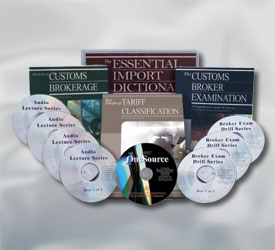
In our first study tip, we discussed the importance of obtaining all of the required resources that are necessary to take the exam. This study tip focuses on the various study aids and materials available to help you prepare for the exam.
The percentage of people who pass the Customs Broker Exam the first time is low, ranging from 3% to 25%. While it is possible to pass the Customs Broker Exam using only the required exam materials, most people find using a variety a supplemental materials and exam study courses significantly increases their potential of passing the exam. The use of additional study materials also improves comprehension and makes better use of limited study time.
Some people learn better by actually doing a task, while others need to read the instructions or hear the instructions. Determining your style of learning and how you learn the best is the key to studying for the exam. If you do not have time to go to lectures, you may prefer correspondence or online courses. If you comprehend better by hearing the information, you may prefer audio lectures or classroom instruction. You should seriously consider the time you have to commit to studying and your learning style when selecting study courses and training materials. We have listed just a few options for using supplemental study aids and courses here.
1. Past Exams
Taking the past exams is a good way to become familiar with the format and types of questions that appear on the test. Using past exams as a study aid also helps you learn the materials, boosts confidence, shows your progress, as well as areas that need improvement. Although not a frequent occurrence, almost all of the questions on the October 2009 came from the collection of previous exams.
2. DVD's, CD's & MP3’s
If you want the convenience of learning at your own pace, DVD's CD's and MP3’s allow you to study from the comfort of your home or office and may be reviewed as often as you like. CD's and MP3’s provide audio which is great for listening to during your daily commute or walk around the block. The DVD's usually simulate a classroom environment, but the advantage is that you can view the lectures at your convenience rather than commute to a class.
3. Online Study Courses
For students who want the convenience of studying at their own pace, online courses provide instruction, examples, quizzes and other tools that are usually available 24/7 anywhere you have an Internet connection.
Boskage Commerce Publications offers a variety of courses, study plans and other materials designed to fit different learning styles, experience levels and needs of students. Click HERE to view a variety of materials and courses. Consider your learning style as you review each of these options. We sincerely believe you will find that one or a combination of several can fit your needs perfectly; however, we may be able to customize plans to fit your needs. Be sure to check out the Customs Broker Exam Room Guide, a perfect resource for regular study and use on test day. This coil bound book contains all CATAIR sections, Directives and miscellaneous resources that will be tested on the upcoming exam. The Guide also includes quick-reference fact sheets such as Incoterms, trade program indicators, types of appraisement, acronyms, CBP fees and more.
Stay tuned to the Boskage Trade News for more helpful hints on studying for the Customs Broker Exam! The next article will provide the pros and cons of using the loose-leaf version of the CBP Regulations. We also welcome any suggestions on topics you would like to see discussed.
Tuesday, July 20, 2010
CBE Study Tip 1: Required Resources

If you plan to take the October exam, it is important develop a study plan that guarantees your chances of success. Boskage wants to help you achieve your goal of passing the exam; therefore, we are starting a series of articles to support you on your journey to success! Our first topic in this series focuses on exam resources.
The first step in your plan should be acquiring the required texts and study materials. These materials come in two categories, “required” and “study aids”. Required materials are those that students must have because questions on the exam have been selected from these sources. CBP lists the required materials in the Notice of Examination. The required materials are listed below and you should obtain them now if do not already have them. All of the required materials can be purchased from Boskage Commerce Publications.
Required Exam Resources
Harmonized Tariff Schedule of the United States (2010 version)
It is important to use this edition since questions often require the determination of the correct HTS number, duty rate and applicability of Free Trade Agreements, all of which may change slightly from year to year.
2.Title 19, Code of Federal Regulations (revised as of April 1, 2009) Parts 0 to140, 141 to 199
Last year, CBP included Parts 200 to End on the Exam; however, it appears that these will not be required for the October 2010 Exam.
Part 149 covering ISF was added to Title 19 in 2009, so the new material would be a great target for this exam.
3. Customs and Trade Automated Interface Requirements (CATAIR)
• Appendix B - Valid Codes
• Appendix D - Metric Conversion
• Appendix E - Valid Entry Numbers
• Appendix G - Common Errors
• Appendix H - Census Warning Messages
• Appendix L - Drawback Errors
• Glossary of Terms
4. Instructions for Preparation of CBP Form 7501 (8-30-2005)
5. Submission Changes for Supplemental Information Letters and Post Entry Amendments
6. Remote Location Filing Eligibility Requirements
7. Directives
• 3510-004, Monetary Guidelines for Setting Bond Amounts
• Amendment to 3510-004 for Certain Merchandise Subject to Antidumping/Countervailing Duty Cases
• 3550-055, Instructions for Deriving Manufacturer/Shipper Identification Code
• 3550-067, Entry Summary Acceptance and Rejection Policy
• 3550-079A, Ultimate Consignee at time of Entry or Release
• 3560-001A, Census Interface-Processing Procedures
• 5610-002A, Standard Guidelines for the Input of Names and Addresses Into Automated Commercial System (ACS) Files
Note: The use of any versions of the listed references other than those recommended is at the applicant's own risk.
Seeing this list of resources on paper and as a stack of documents on your desk can seem quite overwhelming. We’ll discuss organization of your materials in an upcoming article. Stay tuned to the Boskage Trade News for more helpful hints on studying for the Customs Broker Exam. The next article will cover the second category of exam resources, the “Exam Study Aids”.
The first step in your plan should be acquiring the required texts and study materials. These materials come in two categories, “required” and “study aids”. Required materials are those that students must have because questions on the exam have been selected from these sources. CBP lists the required materials in the Notice of Examination. The required materials are listed below and you should obtain them now if do not already have them. All of the required materials can be purchased from Boskage Commerce Publications.
Required Exam Resources
Harmonized Tariff Schedule of the United States (2010 version)
It is important to use this edition since questions often require the determination of the correct HTS number, duty rate and applicability of Free Trade Agreements, all of which may change slightly from year to year.
2.Title 19, Code of Federal Regulations (revised as of April 1, 2009) Parts 0 to140, 141 to 199
Last year, CBP included Parts 200 to End on the Exam; however, it appears that these will not be required for the October 2010 Exam.
Part 149 covering ISF was added to Title 19 in 2009, so the new material would be a great target for this exam.
3. Customs and Trade Automated Interface Requirements (CATAIR)
• Appendix B - Valid Codes
• Appendix D - Metric Conversion
• Appendix E - Valid Entry Numbers
• Appendix G - Common Errors
• Appendix H - Census Warning Messages
• Appendix L - Drawback Errors
• Glossary of Terms
4. Instructions for Preparation of CBP Form 7501 (8-30-2005)
5. Submission Changes for Supplemental Information Letters and Post Entry Amendments
6. Remote Location Filing Eligibility Requirements
7. Directives
• 3510-004, Monetary Guidelines for Setting Bond Amounts
• Amendment to 3510-004 for Certain Merchandise Subject to Antidumping/Countervailing Duty Cases
• 3550-055, Instructions for Deriving Manufacturer/Shipper Identification Code
• 3550-067, Entry Summary Acceptance and Rejection Policy
• 3550-079A, Ultimate Consignee at time of Entry or Release
• 3560-001A, Census Interface-Processing Procedures
• 5610-002A, Standard Guidelines for the Input of Names and Addresses Into Automated Commercial System (ACS) Files
Note: The use of any versions of the listed references other than those recommended is at the applicant's own risk.
Seeing this list of resources on paper and as a stack of documents on your desk can seem quite overwhelming. We’ll discuss organization of your materials in an upcoming article. Stay tuned to the Boskage Trade News for more helpful hints on studying for the Customs Broker Exam. The next article will cover the second category of exam resources, the “Exam Study Aids”.
Wednesday, July 14, 2010
CBP Posts Notice of Exam for October 2010
U.S. Customs and Border Protection posted a notice to its web site announcing the October 2010 Customs Broker License Exam. The exam will be held at various locations on Monday, October 4, 2010. Contact your local port office to verify testing locations. Applications (CBP 3124E) and the exam fee of $200 must be received on or before Friday, September 3, 2010. Applicants should bring the following reference materials to the exam. Please note the appropriate editions for the HTSUS and CFR.
- Harmonized Tariff Schedule of the United States (2010 version)
It is important to use this edition since questions often require the determination of the correct HTS number, duty rate and applicability of Free Trade Agreements, all of which may change slightly from year to year.
- Title 19, Code of Federal Regulations (revised as of April 1, 2009) Parts 0 to140 and 141 to 199
Last year, CBP included Parts 200 to End on the Exam; however, it appears that these will not be required for the October 2010 Exam.
Part 149 covering ISF was added to Title 19 in 2009, so it is a target for this exam.
-Submission Changes for Supplemental Information Letters and Post Entry Amendments
-Remote Location Filing Eligibility Requirements
- Directives
NEW:
The online course with a dedicated instructor and online discussion forum started July 12th. It’s not too late to get started. Click HERE to check it out!
- Harmonized Tariff Schedule of the United States (2010 version)
It is important to use this edition since questions often require the determination of the correct HTS number, duty rate and applicability of Free Trade Agreements, all of which may change slightly from year to year.
- Title 19, Code of Federal Regulations (revised as of April 1, 2009) Parts 0 to140 and 141 to 199
Last year, CBP included Parts 200 to End on the Exam; however, it appears that these will not be required for the October 2010 Exam.
Part 149 covering ISF was added to Title 19 in 2009, so it is a target for this exam.
- Customs and Trade Automated Interface Requirements (CATAIR)
- Appendix B - Valid Codes
- Appendix D - Metric Conversion
- Appendix E - Valid Entry Numbers
- Appendix G - Common Errors
- Appendix H - Census Warning Messages
- Appendix L - Drawback Errors
- Glossary of Terms
-Submission Changes for Supplemental Information Letters and Post Entry Amendments
-Remote Location Filing Eligibility Requirements
- Directives
- 3510-004, Monetary Guidelines for Setting Bond Amounts
- Amendment to 3510-004 for Certain Merchandise Subject to Antidumping/Countervailing Duty Cases
- 3550-055, Instructions for Deriving Manufacturer/Shipper Identification Code
- 3550-067, Entry Summary Acceptance and Rejection Policy
- 3550-079A, Ultimate Consignee at time of Entry or Release
- 3560-001A, Census Interface-Processing Procedures
- 5610-002A, Standard Guidelines for the Input of Names and Addresses Into Automated Commercial System (ACS) Files
NEW:
The online course with a dedicated instructor and online discussion forum started July 12th. It’s not too late to get started. Click HERE to check it out!
Thursday, April 1, 2010
Customs Broker Exam Study Tip 12: CBP Directives
For many years, the Customs Brokers Exam only required the use of the HTSUS and the CBP Regulations; however, in 2004, CBP expanded its scope of materials to include Customs Directives and other reference materials. These materials are important because they provide guidance on activities brokers perform that aren’t included in the regulations. Since their addition, these resources have comprised 8% to 10% of the total questions on the exam. Because of the number of resources, it’s difficult to predict specific areas for testing. The best thing to do is to study all of it. We’ve provided the key highlights for the four most frequently tested supplemental resources.
1. Instructions for Preparation of CBP Form 7501
Although most entry summaries are completed electronically, it’s important to have a good understanding of the information contained in this document. By reading these instructions, you can complete a CBP 7501 by hand without the assistance of a computer. You should keep this document handy and review all blocks because it has been one of the most frequently tested supplemental resources since the implementation of the new CBP 7501 format in September 2005. Become very familiar with each block number, so you can easily reference it. Block 2 (Entry Type Code) and Block 31 (Net Quantity) are easy targets!
2. CD 3510-004 - Monetary Guidelines for Setting Bond Amounts
The purpose of the bond is to protect the revenue and ensure compliance. The amount of a bond is calculated using information on the bond application, the criteria in Part 113 of the CBP Regulations and the guidelines in this directive. This directive provides standardized guidelines for computing the bond amounts for all types of bonds. For the exam, it’s important to know how to calculate single entry and continuous bonds.
The first type of bond is the Activity 1, Importer or Broker Continuous Bond. The minimum amount of a bond in this category is $50,000.
For importers paying zero to $1,000,000 in duties and taxes, the bond should be computed as 10% of the duties and taxes paid for the previous calendar year and issued in increments of $10,000.
For importers paying over $1,000,000 in duties and taxes, the bond should be computed as 10% of the duties and taxes paid for the previous calendar year and issued in $100,000 increments.
The next type of bond is the Activity 1, Importer or Broker Single Transaction Bond. This bond is valid for one shipment and is computed in an amount not less than the total entered value of the merchandise plus all duties, taxes and fees, unless the merchandise falls into a special category. If the merchandise is subject to other government agency requirements such as the FDA or FCC, the bond will be computed in an amount of at least three times the total entered value of the shipment. In addition, the district director may set the single transaction bond amount at 10 percent of the total entered value for unconditionally free merchandise, which is not subject to the previously mentioned categories.
Note:
Not all of the government agencies are included in the list that requires a bond in the amount of three times the value of the shipment. If your goods are not regulated by one of the government agencies on the list, then the single entry bond will be written for value plus duty.
3. CD 3550-055 - Instructions for Deriving Manufacturer/Shipper Identification
Questions involving the manufacturer’s identification code “MID” should be some of the easiest to answer. Not only does this directive provide instructions on how to construct the code, but the information is also included in the CBP Form 7501 Instructions. Just memorize the rules for deriving the MID.
This code is commonly referred to as the MID or Manufacturer Identification Code. This technique is also known as keylining. On the broker’s exam from October 2005, a question required knowledge of the term keylining.
Customs requires the formation of a code from the name and address of the manufacturer.
The MID contains five components that are added together without spaces to create the code. The code can be up to 15 characters in length. The five components consist of the following information:
· Two letter abbreviation for the country of origin
· First three letters of the first name of the manufacturer
· First three letters of the second name of the manufacturer
· First four digits of the street address, and
· First three letters of the city name.
There are some general rules to consider.
· Ignore all punctuation
· Ignore single character initials. and
· Ignore the words “a”, “an”, “and’, “of”, and “the”.
4. 3550-067 - Entry Summary Acceptance and Rejection
Customs Directive 3550-067 provides guidelines for uniform acceptance and rejection of entry summaries. Five major areas of interest in this directive include the following:
· Collections Processing – Rejections
· Acceptance Review and Summary Processing
· Processing of Rejected Entry Summaries
· Time Limit
· Rejection Effect on Entry Summary Filing Time
This information is a little more complicated to grasp, so read each of the major areas and highlight key information.
Although we didn’t cover all of the directives and supplemental materials, they are not any less important. Remember the advice from the beginning of the article - the best thing to do is to study all of it.
We welcome your comments on these suggestions and encourage you to add your own ideas to this forum so that other students studying for the exam can benefit from your experiences. Check the Boskage Trade News regularly to find more useful news for international trade professionals! As soon as the Wizard obtains a copy of the test and has time to work out some preliminary answers, we’ll post them here for your review and comments.
1. Instructions for Preparation of CBP Form 7501
Although most entry summaries are completed electronically, it’s important to have a good understanding of the information contained in this document. By reading these instructions, you can complete a CBP 7501 by hand without the assistance of a computer. You should keep this document handy and review all blocks because it has been one of the most frequently tested supplemental resources since the implementation of the new CBP 7501 format in September 2005. Become very familiar with each block number, so you can easily reference it. Block 2 (Entry Type Code) and Block 31 (Net Quantity) are easy targets!
2. CD 3510-004 - Monetary Guidelines for Setting Bond Amounts
The purpose of the bond is to protect the revenue and ensure compliance. The amount of a bond is calculated using information on the bond application, the criteria in Part 113 of the CBP Regulations and the guidelines in this directive. This directive provides standardized guidelines for computing the bond amounts for all types of bonds. For the exam, it’s important to know how to calculate single entry and continuous bonds.
The first type of bond is the Activity 1, Importer or Broker Continuous Bond. The minimum amount of a bond in this category is $50,000.
For importers paying zero to $1,000,000 in duties and taxes, the bond should be computed as 10% of the duties and taxes paid for the previous calendar year and issued in increments of $10,000.
For importers paying over $1,000,000 in duties and taxes, the bond should be computed as 10% of the duties and taxes paid for the previous calendar year and issued in $100,000 increments.
The next type of bond is the Activity 1, Importer or Broker Single Transaction Bond. This bond is valid for one shipment and is computed in an amount not less than the total entered value of the merchandise plus all duties, taxes and fees, unless the merchandise falls into a special category. If the merchandise is subject to other government agency requirements such as the FDA or FCC, the bond will be computed in an amount of at least three times the total entered value of the shipment. In addition, the district director may set the single transaction bond amount at 10 percent of the total entered value for unconditionally free merchandise, which is not subject to the previously mentioned categories.
Note:
Not all of the government agencies are included in the list that requires a bond in the amount of three times the value of the shipment. If your goods are not regulated by one of the government agencies on the list, then the single entry bond will be written for value plus duty.
3. CD 3550-055 - Instructions for Deriving Manufacturer/Shipper Identification
Questions involving the manufacturer’s identification code “MID” should be some of the easiest to answer. Not only does this directive provide instructions on how to construct the code, but the information is also included in the CBP Form 7501 Instructions. Just memorize the rules for deriving the MID.
This code is commonly referred to as the MID or Manufacturer Identification Code. This technique is also known as keylining. On the broker’s exam from October 2005, a question required knowledge of the term keylining.
Customs requires the formation of a code from the name and address of the manufacturer.
The MID contains five components that are added together without spaces to create the code. The code can be up to 15 characters in length. The five components consist of the following information:
· Two letter abbreviation for the country of origin
· First three letters of the first name of the manufacturer
· First three letters of the second name of the manufacturer
· First four digits of the street address, and
· First three letters of the city name.
There are some general rules to consider.
· Ignore all punctuation
· Ignore single character initials. and
· Ignore the words “a”, “an”, “and’, “of”, and “the”.
4. 3550-067 - Entry Summary Acceptance and Rejection
Customs Directive 3550-067 provides guidelines for uniform acceptance and rejection of entry summaries. Five major areas of interest in this directive include the following:
· Collections Processing – Rejections
· Acceptance Review and Summary Processing
· Processing of Rejected Entry Summaries
· Time Limit
· Rejection Effect on Entry Summary Filing Time
This information is a little more complicated to grasp, so read each of the major areas and highlight key information.
Although we didn’t cover all of the directives and supplemental materials, they are not any less important. Remember the advice from the beginning of the article - the best thing to do is to study all of it.
We welcome your comments on these suggestions and encourage you to add your own ideas to this forum so that other students studying for the exam can benefit from your experiences. Check the Boskage Trade News regularly to find more useful news for international trade professionals! As soon as the Wizard obtains a copy of the test and has time to work out some preliminary answers, we’ll post them here for your review and comments.
Thursday, February 18, 2010
Customs Broker Exam Study Tip 6: Taking Previous Exams
Taking past exams is an important part of any study plan. Persons studying for the Customs Broker Exam have an advantage because past exams are available for students to review. The exams provide information about the types of questions and format of the test. So, now that you have discovered this gold mine of information, what should you do with it?
1. Familiarize yourself with the test format.
It is not necessary to sit down and take a complete test of 80 questions the first time you review the exam. Take time to read a few questions and become familiar with the way the questions are constructed. Practice looking up answers in the HTSUS and Regulations. Watch out for questions containing the words “NOT”, “MAXIMUM”, “EXCEPT” and other words that appear in all capital letters and bold text. Pay close attention to the terminology. Some questions may contain answer options that appear to be the same, such as 10 working days and 10 calendar days. Don’t get in a hurry and select the first answer that contains “10” in it.
Example:
Imported merchandise must be entered within _________ days after landing from the vessel, aircraft or vehicle.
A. 10 calendar days
B. 10 working days
C. 15 calendar days
D. 15 working days
The correct answer is C. Part 142.2(a)
2. Take practice exams in a simulated test environment.
Do your best to recreate the actual test-taking environment and conditions. Find a quiet location to take the test without distraction and threat of interruption. Use only the written reference materials and notes allowed on the exam. Do not use any electronic device other than a battery-operated calculator. Allocate four hours for taking the entire test or two hours if taking half of the exam. The exam contains 80 questions and the time allotted is four hours, which averages out to three minutes per question. You may take less time on some questions and more on others, but it will be impossible to finish the test if you spend 10 minutes on each question.
3. Review your results.
In addition to preparing you for the test format and testing conditions, taking practice tests as part of your study plan builds confidence and allows you to find areas that need more concentrated study. Compare your answers with the answer sheet. Review the questions you answered incorrectly and keep track of the sections of the regulations and HTSUS the correct answer comes from. If you find most of your incorrect answers come from the HTSUS, then devote more time to studying the HTSUS lessons and answering classification questions. If you find that you missed more answers from Part 152 on valuation, then spend more time studying valuation and answering valuation questions. Devoting extra time studying the topics related to the questions missed on the practice exam is a great way to improve your score on the next practice exam and the real exam.
4. Highlight all answers in the CBP Regulations.
As you review the exam questions answered, highlight the correct answers in your copy of the regulations. This will reinforce your knowledge of the regulations, and the highlighted information tends to stand out on the page when you are looking for it. Even though the questions for each exam may be worded differently, the answers will still be found in the same texts. The last twelve exams contained 42 questions from Part 24. Fifteen of those 42 questions came from 19 CFR 24.23. Seven of the 42 questions came from 24.1 and five came from 24.5. By marking the answers in those three sections, you reinforce the information in your mind, and you will be more likely to spot the answer quickly when looking for it on the actual exam.
Click HERE to see a sample of a highlighted page for the answers related to 24.5.
5. Answer test questions as a regular part of study.
In addition to taking practice tests, set aside some study time once or twice a week to answer questions from other exams that you are not using for the simulated practice. Since each question is allotted an average of three minutes, you could plan to spend 30 minutes answering 10 questions from an older exam. You could do this exercise four times a week and have completed half of one exam in a week. Alternatively, you could allot one hour and answer 20 questions at a time. If you did this four times a week, you would have completed an entire exam. This exercise will give you practice managing time. Additionally you will gain familiarity with the question, answer formats and increase your knowledge of the materials.
Note:
When taking old exams, be alert for possible inconsistencies in the answer selections. Tariff numbers and duty rates have changed over the years. A tariff number that was listed as a possible answer on the October 2003 Exam may not be valid in 2010. When calculating the duty rates to determine an answer, you may find a slight variance because of the reduction in duty over the years. With the addition of new free trade agreements, duties have been reduced and eliminated for certain countries.
We welcome your comments on these suggestions and encourage you to add your own ideas to this forum so that other students studying for the exam can benefit from your experiences.
1. Familiarize yourself with the test format.
It is not necessary to sit down and take a complete test of 80 questions the first time you review the exam. Take time to read a few questions and become familiar with the way the questions are constructed. Practice looking up answers in the HTSUS and Regulations. Watch out for questions containing the words “NOT”, “MAXIMUM”, “EXCEPT” and other words that appear in all capital letters and bold text. Pay close attention to the terminology. Some questions may contain answer options that appear to be the same, such as 10 working days and 10 calendar days. Don’t get in a hurry and select the first answer that contains “10” in it.
Example:
Imported merchandise must be entered within _________ days after landing from the vessel, aircraft or vehicle.
A. 10 calendar days
B. 10 working days
C. 15 calendar days
D. 15 working days
The correct answer is C. Part 142.2(a)
2. Take practice exams in a simulated test environment.
Do your best to recreate the actual test-taking environment and conditions. Find a quiet location to take the test without distraction and threat of interruption. Use only the written reference materials and notes allowed on the exam. Do not use any electronic device other than a battery-operated calculator. Allocate four hours for taking the entire test or two hours if taking half of the exam. The exam contains 80 questions and the time allotted is four hours, which averages out to three minutes per question. You may take less time on some questions and more on others, but it will be impossible to finish the test if you spend 10 minutes on each question.
3. Review your results.
In addition to preparing you for the test format and testing conditions, taking practice tests as part of your study plan builds confidence and allows you to find areas that need more concentrated study. Compare your answers with the answer sheet. Review the questions you answered incorrectly and keep track of the sections of the regulations and HTSUS the correct answer comes from. If you find most of your incorrect answers come from the HTSUS, then devote more time to studying the HTSUS lessons and answering classification questions. If you find that you missed more answers from Part 152 on valuation, then spend more time studying valuation and answering valuation questions. Devoting extra time studying the topics related to the questions missed on the practice exam is a great way to improve your score on the next practice exam and the real exam.
4. Highlight all answers in the CBP Regulations.
As you review the exam questions answered, highlight the correct answers in your copy of the regulations. This will reinforce your knowledge of the regulations, and the highlighted information tends to stand out on the page when you are looking for it. Even though the questions for each exam may be worded differently, the answers will still be found in the same texts. The last twelve exams contained 42 questions from Part 24. Fifteen of those 42 questions came from 19 CFR 24.23. Seven of the 42 questions came from 24.1 and five came from 24.5. By marking the answers in those three sections, you reinforce the information in your mind, and you will be more likely to spot the answer quickly when looking for it on the actual exam.
Click HERE to see a sample of a highlighted page for the answers related to 24.5.
5. Answer test questions as a regular part of study.
In addition to taking practice tests, set aside some study time once or twice a week to answer questions from other exams that you are not using for the simulated practice. Since each question is allotted an average of three minutes, you could plan to spend 30 minutes answering 10 questions from an older exam. You could do this exercise four times a week and have completed half of one exam in a week. Alternatively, you could allot one hour and answer 20 questions at a time. If you did this four times a week, you would have completed an entire exam. This exercise will give you practice managing time. Additionally you will gain familiarity with the question, answer formats and increase your knowledge of the materials.
Note:
When taking old exams, be alert for possible inconsistencies in the answer selections. Tariff numbers and duty rates have changed over the years. A tariff number that was listed as a possible answer on the October 2003 Exam may not be valid in 2010. When calculating the duty rates to determine an answer, you may find a slight variance because of the reduction in duty over the years. With the addition of new free trade agreements, duties have been reduced and eliminated for certain countries.
We welcome your comments on these suggestions and encourage you to add your own ideas to this forum so that other students studying for the exam can benefit from your experiences.
Thursday, February 11, 2010
Customs Broker Exam Study Tip 5: Time Management
Now that your study materials and workspace are organized, it is time to discuss time management. Students often feel overwhelmed by the amount of information to be learned in order to pass the exam. Some people feel like they do not have enough time to do all they want to do, so finding additional time to study for the Customs Broker Exam seems like an impossible task.
Have you ever noticed how some people seem to have a natural ability to get things done without appearing stressed out, while others are often late in completing tasks and appear to be rushed all of the time? Have you ever thought that certain people accomplish more because they don’t have to work full time, or they don’t have children or they have more money? Even if those reasons were true, it doesn’t change the fact that everyone has the same amount of time each day. The difference is in how you choose to use your time. Time cannot be bought or saved. Once time is gone, you cannot get it back. Your ability to pass the exam as well as accomplish other goals begins with how you manage your time.
What are some of the causes of time management problems? Three of the most important causes of problems related to time management are procrastination, poor planning and wasting time.
Procrastination is a tendency to avoid a harder or less pleasant task in favor of doing an easier one. Procrastination often results in added stress due to missed deadlines or last minute preparation to meet a deadline. No one needs or wants additional stress, and stress is not good for our health. Visualize what will happen if you procrastinate by putting off studying for the exam. Do you see success or failure? Procrastination is not an option when you visualize success!
Poor planning is another culprit that sabotages achieving success. You must prioritize and create schedules to accomplish the tasks necessary to accomplish your goals. Once you make up your mind to take the exam, you must create a study plan and make it a priority. Of course, most aspiring brokers have full time jobs and personal obligations; however, by creating a plan and schedule that allots specific time for study, you can ensure success by following that schedule. You can’t expect to pass the exam unless you make the effort.
Wasting time is one of the biggest problems exam students face. When too much time is spent doing things that are unproductive, you rob yourself of valuable time that could be spent studying for the exam. It may not be the activity itself that is unproductive, but the amount of time spent doing the activity that creates the problem. If you like watching television, watching one favorite show is not unproductive because it provides relaxation and a sense of well-being. However, watching several hours of television to avoid studying is unproductive. Playing a game on the computer for 15 minutes is not necessarily unproductive because it provides a break from the routine that gives your mind a rest. However, playing computer games for hours robs you of time that could have been spent studying.
What can you do to improve time management in order to pass the Customs Broker’s Exam?
The tools and methods adopted to manage time wisely will largely depend on the amount of individual’s experience with issues covered on the exam, learning styles, ability to grasp and retain new information, work schedule and other personal issues. We have provided a few suggestions below. At the end of this article, you can comment on these and provide some ideas of your own.
• Create a Calendar
Your calendar should allocate time for work, study, exercise, meals, family and personal time. Set a regular time for study. You may want to check off the items completed each day and keep track of time spent on each task.
• Identify Priorities
Prioritize tasks and create a “To Do” List. Complete the most important tasks first. If not all tasks are completed, putting off the least unimportant task isn't procrastination, it's probably good prioritization.
• Learn to Say “NO”
Explain to people that you must study to pass the test and you will be available in a few weeks. Six to eight weeks of intense study is a small commitment of time when you think about the rewards of passing the exam and the amount of free time you will have when you no longer need to study.
• Make Time for Family
Set aside special time for family each week. Remember, quality over quantity. Your family will appreciate the time you spend with them and be more understanding of your need to study when you devote special time for them.
• Set Aside Time for Exercise
Regular exercise reduces stress and promotes good health. Exercise can provide a welcome break from your studies by giving your mind a chance to relax and think of something else. Your choice of exercise can be anything from gardening or walking around the block to a game of softball or a workout at the gym.
• Make Good Use of Unproductive Time
1. Waiting
At one time or another, you will find yourself waiting for something. The wait may be anywhere, from the doctor’s office or at an airport to an unanticipated event, such as a traffic jam. Anticipate circumstances that are likely to create unavoidable delays and be sure to have your notes handy. You can make great use of that time to study. Instead of being upset because you were stuck in the airport for two hours because your plane was late, you can be excited that you were able to devote two more hours to your studies.
2. Commute
Whether it’s by train or car, most people have some type of commute to work. Use the commute time to listen to the audio lectures on CD. Turn that hour spent in a traffic jam into productive study time.
3. Lunch
Do you really need an hour to eat lunch? Consider devoting a portion of your lunch breaks each to study. Eat lunch, then read or eat and read at the same time. Treat yourself to a nice lunch out at the end of the week.
• Reward Yourself
Set daily, weekly and monthly goals. When you have achieved a goal, reward yourself. It may be as small as allowing yourself 30 minutes of television or spending 30 minutes playing a video game to something more significant such as a vacation after receiving news you passed the exam.
We welcome your comments on these suggestions and encourage you to add your own ideas to this forum so that other students studying for the exam can benefit from your experiences.
Check the Boskage Trade News regularly for more helpful hints on studying for the Customs Broker Exam and other useful news for international trade professionals! We will explore “Using Previous Exams” in the next study tip.
Have you ever noticed how some people seem to have a natural ability to get things done without appearing stressed out, while others are often late in completing tasks and appear to be rushed all of the time? Have you ever thought that certain people accomplish more because they don’t have to work full time, or they don’t have children or they have more money? Even if those reasons were true, it doesn’t change the fact that everyone has the same amount of time each day. The difference is in how you choose to use your time. Time cannot be bought or saved. Once time is gone, you cannot get it back. Your ability to pass the exam as well as accomplish other goals begins with how you manage your time.
What are some of the causes of time management problems? Three of the most important causes of problems related to time management are procrastination, poor planning and wasting time.
Procrastination is a tendency to avoid a harder or less pleasant task in favor of doing an easier one. Procrastination often results in added stress due to missed deadlines or last minute preparation to meet a deadline. No one needs or wants additional stress, and stress is not good for our health. Visualize what will happen if you procrastinate by putting off studying for the exam. Do you see success or failure? Procrastination is not an option when you visualize success!
Poor planning is another culprit that sabotages achieving success. You must prioritize and create schedules to accomplish the tasks necessary to accomplish your goals. Once you make up your mind to take the exam, you must create a study plan and make it a priority. Of course, most aspiring brokers have full time jobs and personal obligations; however, by creating a plan and schedule that allots specific time for study, you can ensure success by following that schedule. You can’t expect to pass the exam unless you make the effort.
Wasting time is one of the biggest problems exam students face. When too much time is spent doing things that are unproductive, you rob yourself of valuable time that could be spent studying for the exam. It may not be the activity itself that is unproductive, but the amount of time spent doing the activity that creates the problem. If you like watching television, watching one favorite show is not unproductive because it provides relaxation and a sense of well-being. However, watching several hours of television to avoid studying is unproductive. Playing a game on the computer for 15 minutes is not necessarily unproductive because it provides a break from the routine that gives your mind a rest. However, playing computer games for hours robs you of time that could have been spent studying.
What can you do to improve time management in order to pass the Customs Broker’s Exam?
The tools and methods adopted to manage time wisely will largely depend on the amount of individual’s experience with issues covered on the exam, learning styles, ability to grasp and retain new information, work schedule and other personal issues. We have provided a few suggestions below. At the end of this article, you can comment on these and provide some ideas of your own.
• Create a Calendar
Your calendar should allocate time for work, study, exercise, meals, family and personal time. Set a regular time for study. You may want to check off the items completed each day and keep track of time spent on each task.
• Identify Priorities
Prioritize tasks and create a “To Do” List. Complete the most important tasks first. If not all tasks are completed, putting off the least unimportant task isn't procrastination, it's probably good prioritization.
• Learn to Say “NO”
Explain to people that you must study to pass the test and you will be available in a few weeks. Six to eight weeks of intense study is a small commitment of time when you think about the rewards of passing the exam and the amount of free time you will have when you no longer need to study.
• Make Time for Family
Set aside special time for family each week. Remember, quality over quantity. Your family will appreciate the time you spend with them and be more understanding of your need to study when you devote special time for them.
• Set Aside Time for Exercise
Regular exercise reduces stress and promotes good health. Exercise can provide a welcome break from your studies by giving your mind a chance to relax and think of something else. Your choice of exercise can be anything from gardening or walking around the block to a game of softball or a workout at the gym.
• Make Good Use of Unproductive Time
1. Waiting
At one time or another, you will find yourself waiting for something. The wait may be anywhere, from the doctor’s office or at an airport to an unanticipated event, such as a traffic jam. Anticipate circumstances that are likely to create unavoidable delays and be sure to have your notes handy. You can make great use of that time to study. Instead of being upset because you were stuck in the airport for two hours because your plane was late, you can be excited that you were able to devote two more hours to your studies.
2. Commute
Whether it’s by train or car, most people have some type of commute to work. Use the commute time to listen to the audio lectures on CD. Turn that hour spent in a traffic jam into productive study time.
3. Lunch
Do you really need an hour to eat lunch? Consider devoting a portion of your lunch breaks each to study. Eat lunch, then read or eat and read at the same time. Treat yourself to a nice lunch out at the end of the week.
• Reward Yourself
Set daily, weekly and monthly goals. When you have achieved a goal, reward yourself. It may be as small as allowing yourself 30 minutes of television or spending 30 minutes playing a video game to something more significant such as a vacation after receiving news you passed the exam.
We welcome your comments on these suggestions and encourage you to add your own ideas to this forum so that other students studying for the exam can benefit from your experiences.
Check the Boskage Trade News regularly for more helpful hints on studying for the Customs Broker Exam and other useful news for international trade professionals! We will explore “Using Previous Exams” in the next study tip.
Thursday, January 7, 2010
CBP Posts Notice of Exam for April 2010 - Note Change!
U.S. Customs and Border Protection posted a notice to its web site announcing the April 2010 Customs Broker License Exam. The exam will be held at various locations on Wednesday, April 7, 2010. Contact your local port office to verify testing locations. Applications (CBP 3124E) and the exam fee of $200 must be received on or before Monday, March 8, 2010. Applicants should bring the following reference materials to the exam. Please note the appropriate editions for the HTSUS and CFR.
- Harmonized Tariff Schedule of the United States (2009 version) with Supplements
It is important to use this edition since questions often require the determination of the correct HTS number, duty rate and applicability of Free Trade Agreements, all of which may change slightly from year to year.
- Title 19, Code of Federal Regulations (revised as of April 1, 2009) Parts 0 to140, 141 to 199
Last year, CBP included Parts 200 to End on the Exam; however, it appears that these will not be required for the April 2010 Exam.
Part 149 covering ISF was added to Title 19 in 2009, so it is a target for this exam.
- Customs and Trade Automated Interface Requirements (CATAIR)
Appendix B - Valid Codes
Appendix D - Metric Conversion
Appendix E - Valid Entry Numbers
Appendix G - Common Errors
Appendix H - Census Warning Messages
Appendix L - Drawback Errors
Glossary of Terms
- Instructions for Preparation of CBP Form 7501 (8-30-2005)
-Submission Changes for Supplemental Information Letters and Post Entry Amendments-Remote Location Filing Eligibility Requirements
- Directives
3510-004, Monetary Guidelines for Setting Bond Amounts
Amendment to 3510-004 for Certain Merchandise Subject to Antidumping/Countervailing Duty Cases
3550-055, Instructions for Deriving Manufacturer/Shipper Identification Code
3550-067, Entry Summary Acceptance and Rejection Policy
3550-079A, Ultimate Consignee at time of Entry or Release
3560-001A, Census Interface-Processing Procedures
5610-002A, Standard Guidelines for the Input of Names and Addresses Into Automated Commercial System (ACS) Files
It’s time to get ready for the next Customs Broker Exam! Click HERE for a complete list of the Boskage study plans and products designed to help you study and pass the exam! Remember, there is no substitute for actually reading and studying the required materials. Visit the Boskage Trade News Blog for additional for import/export news updates, articles about specific trade topics and helpful posts related the Customs Broker Exam!
- Harmonized Tariff Schedule of the United States (2009 version) with Supplements
It is important to use this edition since questions often require the determination of the correct HTS number, duty rate and applicability of Free Trade Agreements, all of which may change slightly from year to year.
- Title 19, Code of Federal Regulations (revised as of April 1, 2009) Parts 0 to140, 141 to 199
Last year, CBP included Parts 200 to End on the Exam; however, it appears that these will not be required for the April 2010 Exam.
Part 149 covering ISF was added to Title 19 in 2009, so it is a target for this exam.
- Customs and Trade Automated Interface Requirements (CATAIR)
Appendix B - Valid Codes
Appendix D - Metric Conversion
Appendix E - Valid Entry Numbers
Appendix G - Common Errors
Appendix H - Census Warning Messages
Appendix L - Drawback Errors
Glossary of Terms
- Instructions for Preparation of CBP Form 7501 (8-30-2005)
-Submission Changes for Supplemental Information Letters and Post Entry Amendments-Remote Location Filing Eligibility Requirements
- Directives
3510-004, Monetary Guidelines for Setting Bond Amounts
Amendment to 3510-004 for Certain Merchandise Subject to Antidumping/Countervailing Duty Cases
3550-055, Instructions for Deriving Manufacturer/Shipper Identification Code
3550-067, Entry Summary Acceptance and Rejection Policy
3550-079A, Ultimate Consignee at time of Entry or Release
3560-001A, Census Interface-Processing Procedures
5610-002A, Standard Guidelines for the Input of Names and Addresses Into Automated Commercial System (ACS) Files
It’s time to get ready for the next Customs Broker Exam! Click HERE for a complete list of the Boskage study plans and products designed to help you study and pass the exam! Remember, there is no substitute for actually reading and studying the required materials. Visit the Boskage Trade News Blog for additional for import/export news updates, articles about specific trade topics and helpful posts related the Customs Broker Exam!
Friday, September 11, 2009
Customs Broker Exam Study Tip 9: How to Use the HTSUS – Part 2
Classification is a skill that takes time to develop, but the more effort put into the process, the faster one will become more proficient. The actual process of classification is very complex, almost like reading a foreign language. It is important for both experienced and beginner to understand that the strategy for answering classification questions on the brokers exam is a little different from the process used for classifying goods for your companies on a daily basis. The basic steps discussed are similar to those used in daily transactions, but there is more to the process for those classifying goods on a regular basis. On the exam, you won’t be able to consult with experts or use the Cross Rulings Database. Remember, the average time allotted per question on the exam is three (3) minutes. In actual practice, you would likely spend more than three minutes trying to classify a product. The primary difference between classification on the exam and classification in a business situation is that the exam provides five (5) possible answers, and you know that one of those answers is correct. In real life, you aren’t provided with a set of answers in which you know for certain one is correct. Another difference is that classification questions found on the exam are intentionally complicated and sometimes tricky. Thus, there is a need for a slightly different strategy for answering the questions on the exam.
1. Carefully read the question and make note of the details.
The first step in answering any classification question involves a careful, thorough reading of the question and making note of the details provided. Some of the details may be critical to answering the question correctly. Remember, exam questions have been carefully worded and may be tricky, so some of the detail may be not be necessary. You may want to highlight the details as you read the question.
2. Look up each answer and eliminate those that are clearly incorrect.
The second step for answering classification questions is to look up all the answer selections and eliminate those that are clearly incorrect. This process may be more difficult than it sounds. Classification questions are typically written in such a way that all or most of the answers appear to be correct. The best way to answer them is by a process of elimination. Consider the following example.
What is the classification of a woven nylon scarf measuring 55 cm x 50 cm?
A. 6214.30.0000
B. 6214.40.0000
C. 6213.90.1000
D. 6117.10.2030
E. 6117.10.6020
Notice that the answers are found in two different chapters, so it is likely that we will be able to eliminate one of the chapters. Indeed, we can eliminate Answers D and E easily because Chapter 61 covers knit articles and our scarf is woven.
3. Read Chapter and Section Notes
The third step is to review the Section and Chapter Notes to make sure that there is not any information there that would preclude one or more answers. Section and Chapter Notes provide valuable information about what items are specifically included and excluded as well as useful definitions. Because of the time constraints, it would be easy to skip the Notes; therefore, the writers of the Exam intentionally include questions that require the applicant’s ability to use the Notes. Remember, the Notes can be long and many of them will not be related to the classification you are checking. You must learn to scan the notes for significant headings and keywords. If you still have several potential answers at this stage, the Notes may help you make a determination between them. You should do this even if you only have one answer remaining after the elimination step. If you have eliminated all answers but one when you reach this step and find a Note that eliminates that answer, you will have to start over to find the answer you have eliminated incorrectly. Let’s go back to the scarf.
Answer B should be eliminated because the provision is for artificial fibers and our scarf is nylon, which is a synthetic fiber. If you did not know whether nylon was artificial or synthetic, Chapter 54 and 55 covering man-made fibers would help. It would appear that Answer A is the correct selection for our scarf; however, Chapter 62, Note 7 explains that scarves that measure less than 60 cm should be classified as handkerchiefs under 6213. This is a prime example of the importance of reading the Notes. If we had overlooked the Notes assuming that 6214.30.0000 specifically describing our product was correct, we would have answered the question incorrectly.
In most situations, you will be able to answer questions using these steps; however, there may be a few questions that require an additional step involving the application of the General Notes and/or GRI. For example, a question may require you to select the appropriate duty rate. Once you’ve located the appropriate HTS number, you will select a duty rate based on the country of origin. Given the origin, you may need to check the General Notes to determine if the country is included or excluded from certain free trade agreements.
Now that you are familiar with the organization of the HTSUS and have some tips on how to answer classification questions, it’s time to practice these skills. One of the best ways to practice for the exam is to take past exams. Old exams can be found on CBP’s website. For detailed instruction on classification and related topics, check out our online courses at bcpLearning.com.
Stay tuned to the Boskage Trade News for more helpful hints on studying for the Customs Broker Exam! The next article will cover “Valuation”. We also welcome any suggestions on topics you would like to see discussed.
1. Carefully read the question and make note of the details.
The first step in answering any classification question involves a careful, thorough reading of the question and making note of the details provided. Some of the details may be critical to answering the question correctly. Remember, exam questions have been carefully worded and may be tricky, so some of the detail may be not be necessary. You may want to highlight the details as you read the question.
2. Look up each answer and eliminate those that are clearly incorrect.
The second step for answering classification questions is to look up all the answer selections and eliminate those that are clearly incorrect. This process may be more difficult than it sounds. Classification questions are typically written in such a way that all or most of the answers appear to be correct. The best way to answer them is by a process of elimination. Consider the following example.
What is the classification of a woven nylon scarf measuring 55 cm x 50 cm?
A. 6214.30.0000
B. 6214.40.0000
C. 6213.90.1000
D. 6117.10.2030
E. 6117.10.6020
Notice that the answers are found in two different chapters, so it is likely that we will be able to eliminate one of the chapters. Indeed, we can eliminate Answers D and E easily because Chapter 61 covers knit articles and our scarf is woven.
3. Read Chapter and Section Notes
The third step is to review the Section and Chapter Notes to make sure that there is not any information there that would preclude one or more answers. Section and Chapter Notes provide valuable information about what items are specifically included and excluded as well as useful definitions. Because of the time constraints, it would be easy to skip the Notes; therefore, the writers of the Exam intentionally include questions that require the applicant’s ability to use the Notes. Remember, the Notes can be long and many of them will not be related to the classification you are checking. You must learn to scan the notes for significant headings and keywords. If you still have several potential answers at this stage, the Notes may help you make a determination between them. You should do this even if you only have one answer remaining after the elimination step. If you have eliminated all answers but one when you reach this step and find a Note that eliminates that answer, you will have to start over to find the answer you have eliminated incorrectly. Let’s go back to the scarf.
Answer B should be eliminated because the provision is for artificial fibers and our scarf is nylon, which is a synthetic fiber. If you did not know whether nylon was artificial or synthetic, Chapter 54 and 55 covering man-made fibers would help. It would appear that Answer A is the correct selection for our scarf; however, Chapter 62, Note 7 explains that scarves that measure less than 60 cm should be classified as handkerchiefs under 6213. This is a prime example of the importance of reading the Notes. If we had overlooked the Notes assuming that 6214.30.0000 specifically describing our product was correct, we would have answered the question incorrectly.
In most situations, you will be able to answer questions using these steps; however, there may be a few questions that require an additional step involving the application of the General Notes and/or GRI. For example, a question may require you to select the appropriate duty rate. Once you’ve located the appropriate HTS number, you will select a duty rate based on the country of origin. Given the origin, you may need to check the General Notes to determine if the country is included or excluded from certain free trade agreements.
Now that you are familiar with the organization of the HTSUS and have some tips on how to answer classification questions, it’s time to practice these skills. One of the best ways to practice for the exam is to take past exams. Old exams can be found on CBP’s website. For detailed instruction on classification and related topics, check out our online courses at bcpLearning.com.
Stay tuned to the Boskage Trade News for more helpful hints on studying for the Customs Broker Exam! The next article will cover “Valuation”. We also welcome any suggestions on topics you would like to see discussed.
Friday, July 31, 2009
Customs Broker Exam Study Tip 1: Required Exam Resources
Now that you have made the decision to take the October Customs Broker Exam, it is important develop a study plan that guarantees your chances of success. Boskage wants to help you achieve your goal of passing the exam; therefore, we are starting a series of articles to support you on your journey to success! Our first topic in this series focuses on exam resources.
The first step in your plan should be acquiring the required texts and study materials. These materials come in two categories, “required” and “study aids”. Required materials are those that students must have because questions on the exam have been selected from these sources. CBP lists the required materials in the Notice of Examination. The required materials are listed below and you should obtain them now if do not already have them. All of the required materials can be purchased from Boskage Commerce Publications.
Required Exam Resources
1. Harmonized Tariff Schedule of the United States (2009 version) (Supplement 1)
2. Title 19, Code of Federal Regulations (revised as of April 1, 2009) Parts 0 to140, 141 to 199 and 200 to End) (no supplements)
CBP added Part 200 to End for the April2009 Exam and there were five (5) questions from Part 351 on antidumping. Part 149 covering ISF was added to Title 19 this year, so it is a target for the upcoming October exam.
3. Customs and Trade Automated Interface Requirements (CATAIR)
· Appendix B - Valid Codes
· Appendix D - Metric Conversion
· Appendix E - Valid Entry Numbers
· Appendix G - Common Errors
· Appendix H - Census Warning Messages
· Appendix L - Drawback Errors
· Glossary of Terms
4. Instructions for Preparation of CBP Form 7501 (8-30-2005)
5. C-TPAT - Minimum Security Criteria for Customs Brokers (3-20-2007)
6. Submission Changes for Supplemental Information Letters and Post Entry Amendments
7. CBP Directives
· 3510-004, Monetary Guidelines for Setting Bond Amounts
· Amendment to 3510-004 for Certain Merchandise Subject to Antidumping/Countervailing Duty Cases
· 3550-055, Instructions for Deriving Manufacturer/Shipper Identification
· 3550-067, Entry Summary Acceptance and Rejection
· 3550-079A, Ultimate Consignee at time of Entry or Release
· 3560-001A, Census Interface-Processing Procedures
· 5610-002A, Standard Guidelines for the Input of Names and Addresses Into Automated Commercial System (ACS) Files
Note: The use of any versions of the listed references other than those recommended is at the applicant's own risk.
Seeing this list of resources on paper and as a stack of documents on your desk can seem quite overwhelming. We’ll discuss organization of your materials in an upcoming article. Stay tuned to the Boskage Trade News for more helpful hints on studying for the Customs Broker Exam! The next article will cover the second category of exam resources, the “Exam Study Aids”. We also welcome any suggestions on topics you would like to see discussed.
The Wizard is taking a break from the weekly "Ask the Wizard" article. Check back next week when the Wizard answers one of the questions submitted by our readers.
The first step in your plan should be acquiring the required texts and study materials. These materials come in two categories, “required” and “study aids”. Required materials are those that students must have because questions on the exam have been selected from these sources. CBP lists the required materials in the Notice of Examination. The required materials are listed below and you should obtain them now if do not already have them. All of the required materials can be purchased from Boskage Commerce Publications.
Required Exam Resources
1. Harmonized Tariff Schedule of the United States (2009 version) (Supplement 1)
2. Title 19, Code of Federal Regulations (revised as of April 1, 2009) Parts 0 to140, 141 to 199 and 200 to End) (no supplements)
CBP added Part 200 to End for the April2009 Exam and there were five (5) questions from Part 351 on antidumping. Part 149 covering ISF was added to Title 19 this year, so it is a target for the upcoming October exam.
3. Customs and Trade Automated Interface Requirements (CATAIR)
· Appendix B - Valid Codes
· Appendix D - Metric Conversion
· Appendix E - Valid Entry Numbers
· Appendix G - Common Errors
· Appendix H - Census Warning Messages
· Appendix L - Drawback Errors
· Glossary of Terms
4. Instructions for Preparation of CBP Form 7501 (8-30-2005)
5. C-TPAT - Minimum Security Criteria for Customs Brokers (3-20-2007)
6. Submission Changes for Supplemental Information Letters and Post Entry Amendments
7. CBP Directives
· 3510-004, Monetary Guidelines for Setting Bond Amounts
· Amendment to 3510-004 for Certain Merchandise Subject to Antidumping/Countervailing Duty Cases
· 3550-055, Instructions for Deriving Manufacturer/Shipper Identification
· 3550-067, Entry Summary Acceptance and Rejection
· 3550-079A, Ultimate Consignee at time of Entry or Release
· 3560-001A, Census Interface-Processing Procedures
· 5610-002A, Standard Guidelines for the Input of Names and Addresses Into Automated Commercial System (ACS) Files
Note: The use of any versions of the listed references other than those recommended is at the applicant's own risk.
Seeing this list of resources on paper and as a stack of documents on your desk can seem quite overwhelming. We’ll discuss organization of your materials in an upcoming article. Stay tuned to the Boskage Trade News for more helpful hints on studying for the Customs Broker Exam! The next article will cover the second category of exam resources, the “Exam Study Aids”. We also welcome any suggestions on topics you would like to see discussed.
The Wizard is taking a break from the weekly "Ask the Wizard" article. Check back next week when the Wizard answers one of the questions submitted by our readers.
Tuesday, June 23, 2009
CBP Posts Notice of Exam for October 2009
 U.S. Customs and Border Protection posted a notice to its web site announcing the October 2009 Customs Broker License Exam. The exam will be held at various locations on Monday, October 5, 2009. Contact your local port office to verify testing locations. Applications (CBP 3124E) and the exam fee of $200 must be received on or before Friday, September 4, 2009. Applicants should bring the following reference materials to the exam. Please note the appropriate editions for the HTSUS and CFR.
- Harmonized Tariff Schedule of the United States (2009 version) (Supplement 1)
It is important to use this edition since questions often require the determination of the correct HTS number, duty rate and applicability of Free Trade Agreements, all of which may change slightly from year to year.
Note: This year's Supplement 1 has not yet been released by the ITC, but we expect that it will be released later this summer.
- Title 19, Code of Federal Regulations (revised as of April 1, 2009) Parts 0 to140, 141 to 199 and 200 to End) (no supplements)
CBP added Part 200 to End for the April Exam and there were five (5) questions from Part 351 on antidumping. Part 149 covering ISF was added to Title 19 this year, so it is a target for this exam.
Note: Because the April 2009 editions of Title 19 CFR are not yet available, Boskage has an inquiry in as to whether or not this is a typo. If it is not, all purchasers from Boskage of the 19 CFR for the October 2009 exam will be given the material they need to have an up-to-date edition.
- Customs and Trade Automated Interface Requirements (CATAIR)
- Appendix B - Valid Codes
- Appendix D - Metric Conversion
- Appendix E - Valid Entry Numbers
- Appendix G - Common Errors
- Appendix H - Census Warning Messages
- Appendix L - Drawback Errors
- Glossary of Terms
- Instructions for Preparation of CBP Form 7501 (8-30-2005)
-C-TPAT - Minimum Security Criteria for Customs Brokers (3-20-2007)
-Submission Changes for Supplemental Information Letters and Post Entry Amendments
-Remote Location Filing Eligibility Requirements
- Directives
- 3510-004, Monetary Guidelines for Setting Bond Amounts
- Amendment to 3510-004 for Certain Merchandise Subject to Antidumping/Countervailing Duty Cases
- 3550-055, Instructions for Deriving Manufacturer/Shipper Identification Code
- 3550-067, Entry Summary Acceptance and Rejection Policy
- 3550-079A, Ultimate Consignee at time of Entry or Release
- 3560-001A, Census Interface-Processing Procedures
- 5610-002A, Standard Guidelines for the Input of Names and Addresses Into Automated Commercial System (ACS) Files
It’s time to get ready for the next Customs Broker Exam! Click HERE for a complete list of the Boskage study plans and products designed to help you study and pass the exam! Guarantee that you receive the correct editions of the materials listed on the Notice of Exam by ordering the Required Testing Material Package. Don’t delay! Find the study plan that fits best with your schedule and learning preference. Remember, there is no substitute for actually reading and studying the required materials. Visit the Boskage Trade News Blog for additional for import/export news updates, articles about specific trade topics and helpful posts related the Customs Broker Exam!
Subscribe to:
Posts (Atom)

